 EN
EN

What a Spring Washer Actually Does Under Load
A spring washer is not just a flat disc with a split cut in it. In a bolted joint, it acts like a compressed spring. Tightening the bolt closes the split slightly and stores elastic energy. That energy pushes back against the nut and clamped surface, helping hold axial tension when vibration or small settlement tries to remove it.
A plain flat washer spreads load but adds little springback. A split spring washer made to DIN 127 or ASME B18.21.1 adds a small amount of travel. That travel can compensate for tiny gaps as parts settle. It can also bite into the bearing surface and raise friction. Both effects depend on proper bolt preload.
Why Vibration Loosens Bolted Joints
Vibration loosens fasteners through relative motion. If clamped parts slide sideways even a few thousandths of an inch, the bolt can rotate backward. Preload drops, the joint separates, impact loads rise, and the bolt either backs out or fatigues. A spring washer tries to interrupt that cycle by keeping live force against the nut.
Not all vibration is equal. Axial vibration pulls along the bolt axis and is less damaging than transverse vibration, where parts slide across each other. Junker testing, standardized as DIN 65151, was created to study that transverse motion. Work in that tradition shows many locking devices only help when preload stays high. A loose bolt cannot be saved by a washer alone.
Where Spring Washers Make Sense in Real Equipment
Spring washers appear in pumps, motors, compressors, electrical panels, lawn equipment, automotive brackets, and DIY assemblies. They fit light to medium duty joints where fast assembly, low cost, and moderate vibration meet. In these places, a spring washer can reduce the chance of a nut walking loose. It can also limit minor galling when hardness is matched to the bolt and plate.
A chemical plant retrofit in southern China offers a useful example. A maintenance team found pump base bolts with flattened spring washers and dark wear marks. The bolts had been run down with an impact wrench and never torque checked. After surfaces were cleaned, damaged washers replaced, and torque set to specification, the joint held better. The lesson was not that spring washers fail. The lesson was that preload and hardness matter.
The Limits That Honest Engineering Has to Admit
Spring washers are not a cure for every vibration problem. Split lock washers can flatten under high preload, especially when softer than the bolt or clamped part. They can score plated surfaces, which matters in grounding or painted panels. In severe transverse vibration, wedge-locking washers or threadlockers often perform better. That does not make a spring washer useless. It makes it a tool with a defined job.
| Locking method | Transverse vibration resistance | Reusability | Surface impact | Best fit |
|---|---|---|---|---|
| Split spring washer | Low to moderate | Limited after flattening | Moderate, can bite | Light to medium duty |
| Flat washer only | Low | High | Low | Load spreading |
| Wedge-locking washer | High | Limited | High, paired surfaces | Severe vibration |
| Nylon insert lock nut | Moderate | Limited | Low | Adjustable joints |
| Threadlocker | Moderate to high | Low after cure | Low | Small permanent joints |
Material, Hardness, and Fit Decide the Outcome
A spring washer works only if it can flex and recover. Spring steel, normally carbon steel with proper heat treatment, gives that behavior. Stainless steel resists corrosion but can gall and may recover less depending on grade. A washer that is too soft flattens and stays flat. One that is too hard can crack or chew the mating surface.
Fit matters too. The inner diameter should clear the bolt without excessive play. The outer diameter should sit on the clamped surface, not hang over a hole or radius. A loose washer can move, wear, and lose preload. Inspectors often look for fretting dust, shiny wear rings, and flattened split gaps. Those signs reveal more than a quick visual pass.
How to Specify and Inspect Without Guesswork
Start with the joint, not the washer. Ask what load the bolt must hold, what surfaces are clamped, and how much transverse motion is possible. Then match the washer to bolt grade and environment. Outdoor or washdown equipment may need corrosion resistance more than maximum spring force. High-temperature areas may need a different material or locking method because standard carbon steel can relax or corrode.
Inspection should include torque verification, not just a check that a washer is present. A crushed flat spring washer signals wrong preload or hardness. A cracked washer signals brittle material or abusive installation. Reuse deserves caution because a flattened washer may not recover its original height. In critical joints, a documented torque plan and a locking method matched to vibration direction will beat any single hardware trick.
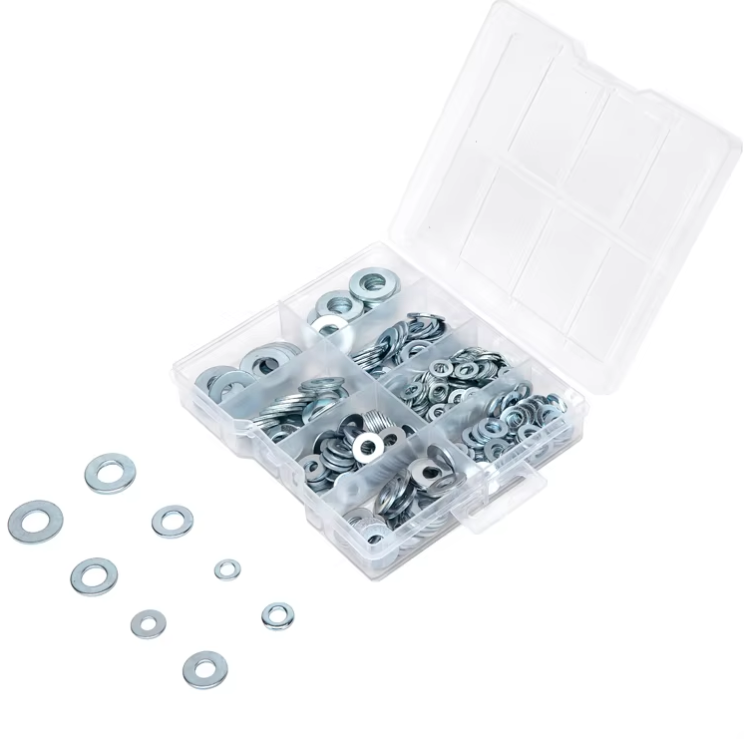
For buyers who need spring washers packed in plastic-absorbing boxes, PS, PP, ABS, or PVC blister configurations, Zhongsheng Hardware has supplied DIY hardware assortments since 1993. A spring washer is small, but the right one, installed with the right preload, can make a real difference in a vibrating assembly.