 EN
EN

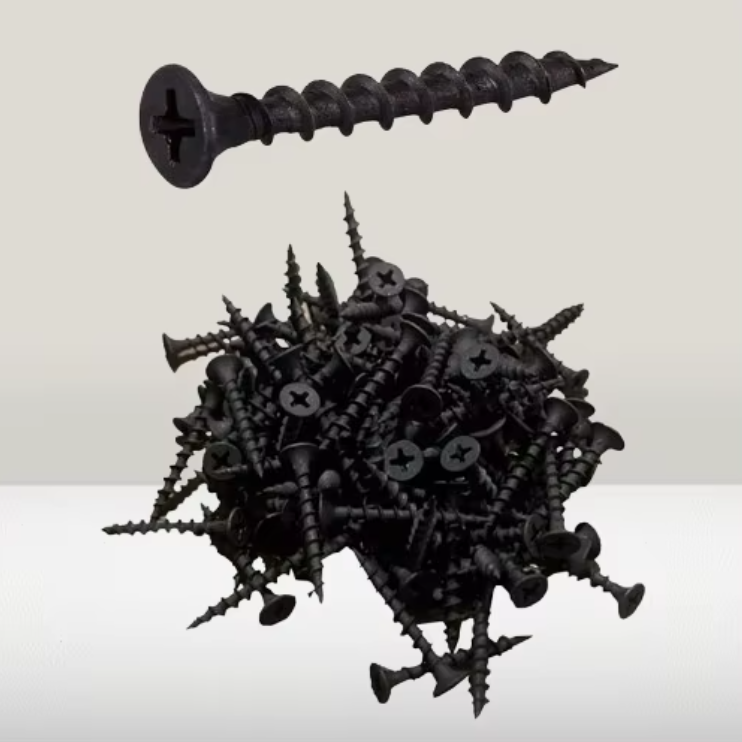
Why Phillips Drive Became the Default on Drywall Crews
Walk onto almost any residential or light commercial framing site in North America, and a drywall screw gun is likely loaded with a Phillips bit. Tooling history, installer habit, and a forgiving drive shape explain why. A Phillips head lets a screw spin onto the bit without much fuss. When a worker holds a panel with one hand and reaches overhead with the other, that self-centering action matters. The drywall screw itself is usually a bugle-head fastener with coarse or fine threads, designed to dimple the paper without tearing it. Phillips drive became common because the bits were already in every pouch.
The Cross Slot Does More Than Look Familiar
Phillips geometry uses a cross with tapered walls. Four contact points and a taper encourage cam-out when torque climbs. That sounds like a flaw, and sometimes it is. On a drywall panel, cam-out acts like a crude torque limiter, helping prevent the screw from driving through the paper face. The cross also accepts a bit from a slight angle, which helps around corners, outlets, or ceiling joists.
Compare that with other drives. A square drive offers more bit engagement and less cam-out. Torx takes that further, with higher torque transfer and longer bit life. Those drives dominate in decking, cabinetry, and automotive work. Phillips remains common in drywall because torque demand is modest and the fastener is cheap. A drywall screw does not hold a structural beam. It clamps a gypsum panel to wood or metal framing without crushing the board.
| Drive style | Bit engagement | Cam-out tendency | Typical drywall use | Main trade-off |
|---|---|---|---|---|
| Phillips | Moderate | High | Very common | Bit slips at high torque |
| Square | High | Low | Occasional | Less forgiving alignment |
| Torx | Very high | Very low | Growing | Higher bit cost |
| Hex | High | Low | Rare | Bulkier head |
What Changes When the Wall Is Long and the Arm Is Tired
A case from a plant office retrofit in southern China shows why habit beats theory. The project had long corridor walls, metal studs, and two crews working opposite shifts. The spec called for fine-thread drywall screws on 25-gauge studs. One crew tried a square drive for a few runs. The bits held well, but installers kept dropping them when changing positions. Phillips bits were already on every belt. By the second day, both crews were back on Phillips. The wall did not care. The schedule did.
That story is not an argument that Phillips is technically superior. Jobsite economics often favor the tool already in hand. Square and Torx can reduce cam-out, but they add a switching cost. On a large commercial job, that cost may be worth it. On a small repair, Phillips usually wins by default.
Standards, Coatings, and the Details That Cause Callbacks
ASTM C1002 covers steel self-piercing tapping screws used for gypsum panel attachment. The standard addresses dimensions, thread form, head type, and performance. It does not say every drywall screw must be Phillips. It gives a baseline. The drive recess still has to match the bit, and the bit has to match the tool.
Coating matters too. Black phosphate is common because it offers some lubricity and resists rust in dry interior conditions. In humid or exterior-adjacent assemblies, a different coating or a stainless screw may be needed. That limitation is worth stating plainly. Phillips drive does not solve moisture, and it does not turn a standard drywall screw into a structural fastener. It is one part of a system that includes the panel, the framing, the joint compound, and the installer's technique.
Where Phillips Starts to Lose Its Edge
High-torque applications expose the weakness. If a screw is long, the substrate is dense, or the driver is too aggressive, a Phillips bit can strip the recess. The head can burr. Once the cross is rounded out, removal becomes a problem. Square or Torx drives handle those conditions with less fuss.
There are also regional preferences. In parts of Europe, drywall screws often use a Pozidriv or Torx-style recess. In North America, Phillips remains the default for many drywall guns and bulk boxes. Neither habit is wrong. The right choice depends on framing material, panel type, tooling on site, and tolerance for bit changes.
Why the Supply Chain Still Runs on Phillips
For manufacturers, Phillips drywall screws are a volume product. The tooling is mature, the heads form consistently, and the bits are commodity items. The real differentiators sit in the details: recess depth, point sharpness, thread rolling, heat treatment, and coating uniformity. A screw that looks fine in a bin can still cause problems if the recess is shallow or the point is dull. Process control matters more than a flashy catalog.
Zhongsheng has been making DIY hardware assortments and fasteners since 1993, with plastic-absorbing box packaging in PS, PP, ABS, and PVC blister formats. For buyers who need drywall screws packed for retail or contractor kits, that manufacturing depth and packaging flexibility keeps orders moving without forcing a choice between quality and price.