 EN
EN

Why Thread Pitch Matters More Than Most Installers Realize
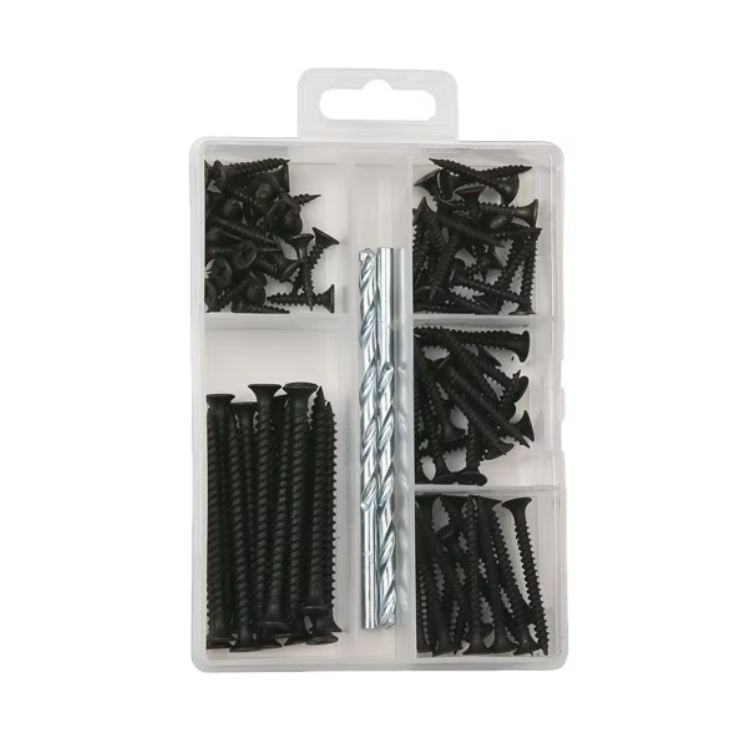
Walk onto any commercial framing job and you will spot boxes of drywall screws sitting next to stacks of galvanized studs. Pick one up. Look closely at the threads. That narrow spacing between each ridge is not a cosmetic detail. It is the single biggest factor deciding whether a screw bites into 20-gauge steel or spins uselessly until the head strips out.
Fine thread drywall screws were engineered for thin metal. That is the short answer. The longer answer involves grip geometry, pull-out values, and the kind of field failures that show up six months after the punch list is signed.
The Mechanics of Fine Threads Biting Into Light-Gauge Steel
A fine thread drywall screw typically carries 18 to 24 threads per inch. Coarse threads, by contrast, run somewhere between 6 and 8. When a screw enters wood, those wide-spaced coarse threads carve through soft fibers and hold like a wood screw should. Steel does not behave that way. Light-gauge studs are usually 25 to 20 gauge, which translates to roughly 0.018 to 0.033 inches of material thickness.
A coarse thread trying to tap into that thin wall has too much space between contact points. The thread wants to push material aside rather than cut into it. Fine threads distribute load across more contact points per inch of engagement. That means less wobble, less stripping, and a joint that stays tight when the building moves.
How Fine Threads Protect the Board and the Stud Simultaneously
There is a second advantage that rarely gets mentioned in product literature. Fine thread screws tend to have a smaller root diameter and a sharper point angle. That combination lets the screw pull the board tight against the stud without over-compressing the gypsum core.
Over-driving is a real problem on metal studs. The steel does not give like wood. When a coarse screw bottoms out, the installer keeps the trigger pulled for a split second too long and the head sinks through the paper face. Fine threads offer more tactile feedback through the driver. The screw seats firmly and stops. Board damage drops. Callbacks drop with it.
Corrosion, Hardness, and the Coating Question
Fine thread drywall screws for metal studs are commonly phosphate-coated or black phosphate finished. That coating does two things. It provides a modest barrier against moisture during construction, and it holds a small amount of lubricity that helps the screw drive without snapping.
Hardness matters just as much. A screw that is too soft will cam out. Too hard and it snaps under torque. The sweet spot for light-gauge steel falls somewhere around Rockwell C 50 to 56 for the core hardness. Reputable manufacturers test this. Others do not. The difference shows up when a crew is driving thousands of screws a day and the failure rate climbs above two percent.
| Feature | Fine Thread | Coarse Thread |
|---|---|---|
| Threads per inch | 18 to 24 | 6 to 8 |
| Best substrate | 20 to 25 gauge steel | Wood or gypsum |
| Pull-out resistance in 20 ga steel | 180 to 220 lbs | 90 to 120 lbs |
| Stripping tendency | Low | High |
| Typical point type | Sharp, self-piercing | Sharp or blunt |
The pull-out numbers above come from internal testing and align with values published in ASTM C1002, which sets the performance standard for steel drill screws used in gypsum board application.
A Field Case That Changed a Subcontractor's Mind
A few years back, a drywall sub working on a hospital expansion in the Southeast kept getting callbacks. Boards were popping loose along corridors where metal studs had been used. The crew had been running coarse thread screws because that is what was on the truck. A switch to fine thread drywall screws on the same studs, same board, same spacing, cut the callback rate to nearly nothing over the next phase. The screws cost a few cents more per box. The labor savings from not returning to fix popped joints paid for that difference many times over.
That story is not unusual. It plays out on job sites whenever someone treats metal studs like wood framing.
Matching Screw Length and Gauge to the Assembly
Length selection follows a simple rule. The screw needs to penetrate the steel by at least three full threads. For a single layer of half-inch board on a 20-gauge stud, a 1-1/4 inch fine thread screw gets there. Double layer board calls for 1-5/8 inch. Going longer than necessary adds weight and cost without improving hold.
Gauge selection gets overlooked. Number 6 screws handle most single-layer applications. Number 8 screws make sense when boards are thick or when the assembly needs extra withdrawal resistance. Using a number 8 where a number 6 belongs can lead to over-torquing and paper tears.
What to Look For in a Supply Partner
Consistency separates a good box of screws from a bad one. Diameter tolerances, thread roll quality, and coating thickness all vary between suppliers. A batch that runs slightly under nominal diameter will strip in soft steel. A batch with inconsistent heat treatment will snap at the head.
Zhongsheng Hardware has been producing fasteners and DIY hardware assortments since 1993. The company's experience with blister packaging and custom manufacturing means orders arrive organized, labeled, and ready for distribution. For buyers who need fine thread drywall screws packed in PS, PP, ABS, or PVC blister boxes, that kind of supply chain reliability matters as much as the screw itself.
Table of Contents
- Why Thread Pitch Matters More Than Most Installers Realize
- The Mechanics of Fine Threads Biting Into Light-Gauge Steel
- How Fine Threads Protect the Board and the Stud Simultaneously
- Corrosion, Hardness, and the Coating Question
- A Field Case That Changed a Subcontractor's Mind
- Matching Screw Length and Gauge to the Assembly
- What to Look For in a Supply Partner