 EN
EN

Why Thin Sheet Fastening Fails With Ordinary Screws
Thin sheets expose every weakness in a threaded joint. When a machine screw bites into 0.8 mm or 1.2 mm steel, aluminum, or plastic, the threads engage only a few peaks. Normal torque can dimple the panel, strip the hole, or raise a crown around the fastener. The joint may look tight, but the load path is fragile. Vibration and thermal cycling work the hole open, and once the hole grows, torque values become meaningless. A blind rivet changes that because its body expands behind the panel, creating a secondary bearing surface that thin-gauge assemblies need.
How a Blind Rivet Spreads Load Inside the Hole
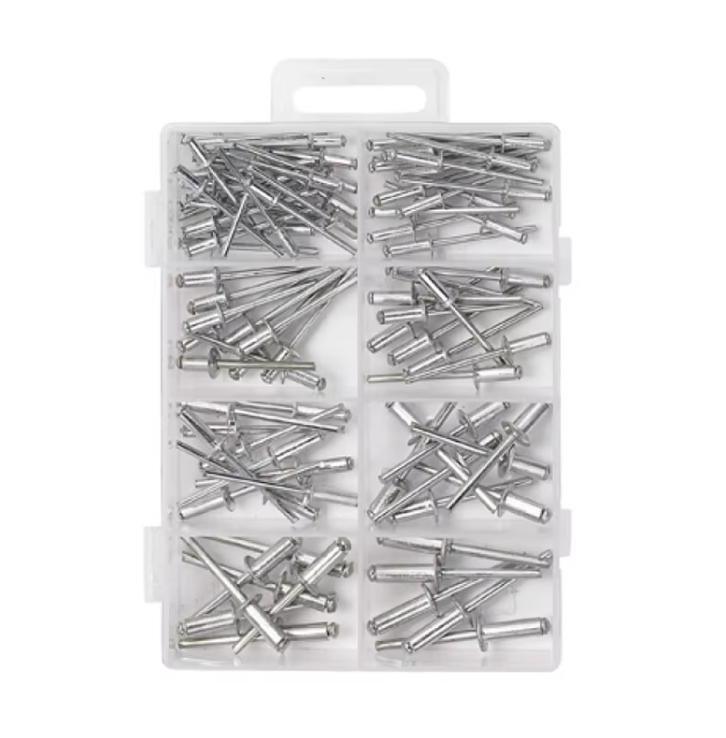
A blind rivet is a two-part fastener: a hollow body and a mandrel. The installation tool pulls the mandrel into the body, causing the tail to expand. The rivet head bears against the front panel, while the expanded body clamps the sheets from the back. Load transfer is not concentrated on a few thread crests. It is distributed across the rivet body, the hole wall, and the backside footprint. That matters in thin sheets because the material has little depth for threads. A 4.8 mm blind rivet in 1.0 mm mild steel can develop a shear value in the low kilonewton range, depending on material, grip length, and hole fit. Expansion creates bearing area, and bearing area reduces stress concentration.
Vibration, Pull-Through, and the Truth About Clamp Load
Threaded fasteners can loosen when vibration causes relative motion between mating threads. Prevailing torque nuts, thread locker, and serrated washers help, but they add parts and process steps. Blind rivets do not back out because there are no threads to rotate. That does not make them immune to fatigue. A loose rivet can still wear its hole if the joint is underdesigned, the hole is oversized, or the sheets flex independently. Clamp load also differs. A screw can be tightened to a controlled torque, while a blind rivet stops when the mandrel breaks. The break load is set by the rivet design, so clamp is consistent but not adjustable. For thin panels, that trade-off often favors the rivet.
When Screws Still Make Sense on Thin Panels
Blind rivets are not a universal replacement. Screws win when the joint needs frequent disassembly, when electrical grounding must be maintained through a threaded connection, or when a specific torque preload is part of the calculation. Machine screws with captive nuts, rivet nuts, or clinch fasteners can also solve thin-sheet problems, though they add backside hardware. The decision comes down to serviceability, joint stiffness, and assembly steps. A simple comparison helps:
| Factor | Machine screw in thin sheet | Blind rivet |
|---|---|---|
| Access needed | Both sides for nut or clinch hardware | One side only |
| Hole tolerance | Tight, often +/- 0.05 mm | More forgiving, often +/- 0.15 mm |
| Vibration loosening | Threads can rotate loose | No threaded backout |
| Clamp load | Adjustable by torque | Set by mandrel break load |
| Disassembly | Reversible with tools | Usually drilled out |
| Thin sheet deformation | Higher risk at high torque | Lower risk when hole fit is correct |
The table is not a scorecard. It maps trade-offs. A project with removable access covers may still choose screws. A project with permanent panels, mixed materials, or limited backside access often moves toward blind rivets.
Material Pairing and Hole Preparation That Save Rework
Most field failures blamed on blind rivets trace back to hole preparation or material pairing. Aluminum rivets in aluminum sheets reduce galvanic risk, but they may not match the shear strength of steel rivets. Steel rivets in aluminum can create a galvanic couple, so coatings, sealants, or isolating washers may be needed. Hole size matters too. A wandering drill creates an oval hole, and an oval hole gives the rivet body uneven support. Deburring is not cosmetic. Sharp edges can cut into the rivet body. During a retrofit at a chemical plant in southern China, a crew replacing access panels on thin stainless enclosures found that machine screws kept enlarging the drilled holes after repeated vibration cycles. The panels were switched to sealed aluminum blind rivets with controlled grip length. Hole elongation stopped, and callbacks dropped. The fix was better hole fit, correct grip, and a fastener that matched the thin-gauge load path.
What the Shop Floor Data Actually Shows
Industry standards such as ISO 15977 and IFI-114 cover dimensional and mechanical requirements for blind rivets, including shear and tensile testing. Those standards give engineers a repeatable way to compare products. Thin sheets with one-sided access, vibration, and mixed materials tend to favor blind rivets. Thick plates, high preload requirements, and joints that need regular service tend to favor threaded fasteners. The best results come from matching the fastener to the joint, not from treating any one fastener as a cure-all. Zhongsheng has spent decades supplying packaged hardware assortments and supporting buyers who need consistent parts, practical material options, and reliable supply from a manufacturing base in Wenzhou. That experience matters when a small fastener decision has to survive real assembly conditions.