 EN
EN

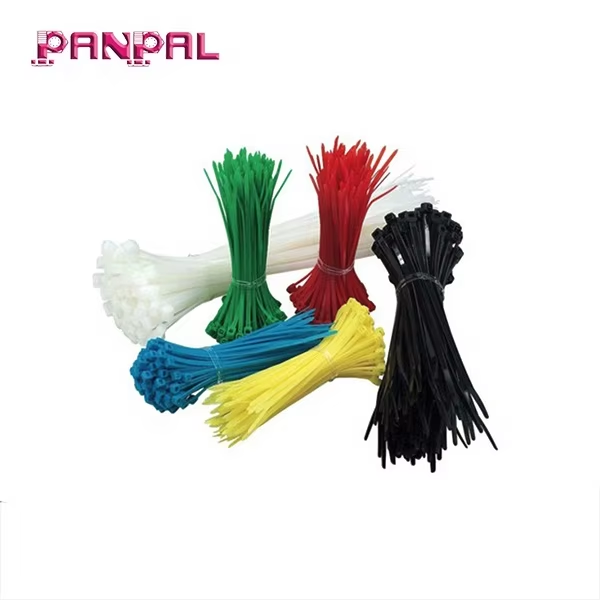
Material Science Behind Industrial Cable Ties
Stainless Steel vs. High-Performance Polymers: Strength, Corrosion, and Thermal Limits
Choosing between stainless steel and high-performance polymer industrial cable ties hinges on matching material properties to operational demands. Stainless steel ties deliver exceptional tensile strength—often exceeding 500 lbs—and resist corrosion from salt, acids, and solvents, making them ideal for marine or chemical processing environments. Their primary limitations are rigidity and electrical conductivity, which can pose challenges in sensitive electrical enclosures. High-performance polymers—including nylon 6/6 and fluoropolymers like Tefzel—offer superior strength-to-weight ratios, inherent electrical insulation, and balanced chemical resistance. Nylon 6/6 remains stable from –40°F to 185°F; fluoropolymers extend that upper limit to 300°F. However, prolonged UV exposure or aggressive chemical contact accelerates polymer degradation, whereas stainless steel retains its structural integrity under those same conditions. Engineers must weigh not just peak load capacity but the full environmental profile: thermal cycling, corrosive agents, mechanical vibration, and long-term stress relaxation.
UL 62275 and IEC 62275 Test Data: How UV, Heat, and Chemical Exposure Impact Long-Term Integrity
UL 62275 and IEC 62275 provide standardized, repeatable benchmarks for evaluating how industrial cable ties withstand real-world stressors—including UV radiation, thermal extremes, and chemical immersion. Under accelerated UV testing (1,000 hours), unstabilized high-performance polymers can lose up to 30% of initial tensile strength; UV-stabilized variants with carbon black or HALS additives mitigate this significantly. Stainless steel shows no UV degradation but remains vulnerable to chloride-induced stress corrosion cracking in coastal or offshore settings. Thermal cycling between –40°C and 85°C induces creep in polymer ties, reducing fastening torque by up to 15%, while stainless steel maintains dimensional and mechanical stability. In chemical immersion tests, standard nylon degrades rapidly in acidic environments, whereas fluoropolymer ties and ASTM A276-compliant stainless steel both achieve top-tier resistance ratings. These test results empower engineers to move beyond nominal specifications and select materials validated for sustained performance in their specific operating environment.
Real-World Tensile Performance of Industrial Cable Ties
Lab Ratings vs. Field Reality: Vibration, Thermal Cycling, and Dynamic Fatigue Effects
Laboratory tensile ratings reflect static, single-event failure loads—valuable for baseline comparison but insufficient for predicting field longevity. In practice, industrial cable ties endure continuous vibration from motors and compressors, repeated thermal expansion and contraction, and intermittent dynamic loading. These conditions accelerate wear at the locking mechanism and promote polymer creep, potentially eroding effective load capacity by 30–50% over time. A tie rated at 175 lbs in controlled testing may fail below 100 lbs after months of vibrational stress. Relying solely on static data risks under-engineering critical bundling applications. Instead, accelerated life testing that replicates combined thermal, mechanical, and environmental stresses delivers a more accurate forecast of service life—and underscores the need for appropriate safety factors and robust mounting support in dynamic installations.
Corrosion Creep and Load Retention Loss in Harsh Environments
In marine, chemical, or high-humidity settings, cable ties face corrosion creep: a progressive loss of clamping force driven by environmental degradation. For nylon-based ties, moisture absorption and UV exposure trigger molecular chain scission, causing plastic relaxation and gradual loosening. Stainless steel avoids rust and general corrosion but remains susceptible to stress corrosion cracking when under sustained tension in chloride-rich atmospheres—particularly in poorly ventilated or crevice-prone areas. Over extended service, even minor creep mechanisms can reduce load retention by 20% or more, risking bundle slippage, abrasion damage, or signal interference. Selecting UL-listed ties with verified corrosion resistance—and matching material grade (e.g., 316 stainless steel or hydrolysis-resistant fluoropolymers) to the precise chemical or atmospheric exposure—is essential to preserving mechanical integrity over years of operation.
Sector-Specific Selection Guidelines for Industrial Cable Ties
Marine & Offshore: ASTM A276 Stainless Steel Ties for Salt-Fog and High-Humidity Environments
For marine and offshore applications—where humidity averages 85% year-round and salt-fog exposure is constant—316-grade stainless steel industrial cable ties compliant with ASTM A276 deliver unmatched reliability. These ties retain over 80% of original tensile strength after 2,000 hours of salt spray testing per ASTM B117, outperforming standard nylon ties, which suffer ~40% strength loss within just 500 hours. Their non-porous, chromium- and molybdenum-enriched surface resists chloride ion penetration, eliminating the corrosion creep that undermines load retention on rigs, vessels, and subsea infrastructure.
Renewable Energy & Telecom Infrastructure: UV-Stabilized, Non-Release Industrial Cable Ties for Outdoor Deployment
Solar farms and telecom towers demand industrial cable ties engineered for decades of unattended outdoor service. UV-stabilized variants—formulated with ≥0.25% carbon black or advanced HALS stabilizers—meet ASTM G154 accelerated weathering requirements, showing less than 5% tensile strength degradation after 5,000 hours. Non-release locking mechanisms prevent accidental disengagement during extreme thermal cycling (–40°C to 85°C), while hydrolysis-resistant polymers preserve elongation and flexibility in monsoon-prone or high-humidity regions. These features collectively ensure consistent cable management performance across the full lifecycle of renewable and telecom assets.
FAQs
What are the primary benefits of using stainless steel cable ties?
Stainless steel cable ties provide exceptional tensile strength, resist harsh chemical and corrosive environments, and maintain structural integrity under prolonged UV exposure and thermal cycling.
How do high-performance polymers compare to stainless steel for cable ties?
High-performance polymers, such as nylon 6/6 and fluoropolymers, offer superior strength-to-weight ratios, electrical insulation, and cost efficiency. However, they are susceptible to degradation from prolonged UV exposure and aggressive chemical contact compared to stainless steel.
What standards test the durability of industrial cable ties?
Standards like UL 62275 and IEC 62275 assess cable tie durability under conditions such as UV exposure, thermal extremes, and chemical immersion, ensuring long-term reliability in industrial applications.
Can stainless steel ties resist chloride-rich environments?
While stainless steel ties resist general corrosion, they can be susceptible to stress corrosion cracking in chloride-rich, high-humidity environments, particularly if under sustained tension.
What makes UV-stabilized cable ties suitable for outdoor settings?
UV-stabilized cable ties are formulated with additives like carbon black or HALS stabilizers to mitigate UV-induced degradation, ensuring reliable long-term performance in outdoor applications.
Table of Contents
- Material Science Behind Industrial Cable Ties
- Real-World Tensile Performance of Industrial Cable Ties
- Sector-Specific Selection Guidelines for Industrial Cable Ties
-
FAQs
- What are the primary benefits of using stainless steel cable ties?
- How do high-performance polymers compare to stainless steel for cable ties?
- What standards test the durability of industrial cable ties?
- Can stainless steel ties resist chloride-rich environments?
- What makes UV-stabilized cable ties suitable for outdoor settings?