 EN
EN

Why Flat Washer Size Matters More Than Most People Think
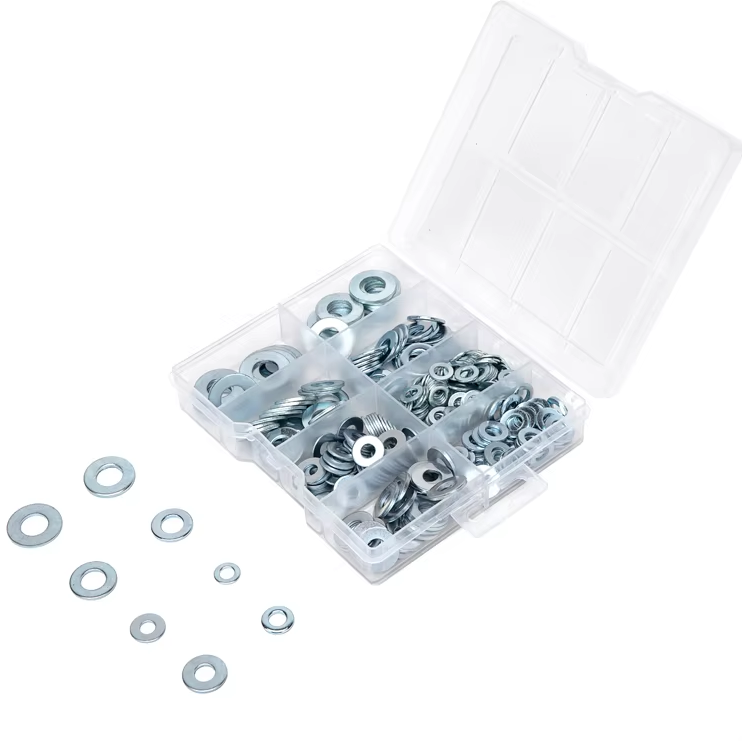
A flat washer is a stamped disc, but its dimensions decide whether a joint behaves predictably. In a hardware kit, the flat washer is often the cheapest part, yet it controls bearing surface, hole coverage, and how clamp load spreads into plastic, wood, sheet metal, or composites. Too small, and the washer can dish or sink into soft material. Too large, and it may rub nearby ribs, weld nuts, or stamped brackets. Common kit sizes follow screw and bolt diameters, plus standards that keep replacement parts easy to find.
The Inch Series Sizes Found in Typical Hardware Kits
North American kits usually follow SAE or USS washer families. SAE washers are narrower and often thicker. USS washers are wider and thinner, so they cover more area on soft materials or oversized holes. A typical kit might include #6, #8, #10, 1/4 in, 5/16 in, 3/8 in, and 1/2 in. The label refers to the screw or bolt size, not the washer's inside diameter. A 1/4 in SAE flat washer commonly has an inside diameter near 0.281 in and an outside diameter near 0.625 in. ASME B18.22.1 is a common reference for inch washer dimensions.
| Kit label | Nominal fastener | Typical ID | Typical OD | Thickness | Standard |
|---|---|---|---|---|---|
| #10 | #10 screw | 0.203 in | 0.500 in | 0.036 in | SAE |
| 1/4 in | 1/4 in bolt | 0.281 in | 0.625 in | 0.065 in | SAE |
| 5/16 in | 5/16 in bolt | 0.344 in | 0.688 in | 0.065 in | SAE |
| 5/16 in | 5/16 in bolt | 0.344 in | 0.875 in | 0.083 in | USS |
| M6 | M6 bolt | 6.4 mm | 12 mm | 1.6 mm | DIN 125 |
| M8 | M8 bolt | 8.4 mm | 16 mm | 1.6 mm | DIN 125 |
| M10 | M10 bolt | 10.5 mm | 20 mm | 2.0 mm | DIN 125 |
Metric Flat Washer Sizes and Where They Fit
Metric kits often follow DIN 125 or ISO 7089. Common labels include M3, M4, M5, M6, M8, M10, and M12. A DIN 125 M6 flat washer usually has a 6.4 mm inside diameter, a 12 mm outside diameter, and a 1.6 mm thickness. The inside diameter is intentionally larger than the bolt's nominal diameter. That gap absorbs tolerance stack-up, plating thickness, and minor misalignment. Metric washers show up in furniture, electrical enclosures, automotive brackets, and repair kits. A kit that mixes M4, M5, and M6 washers without clear labels can waste time.
How Kits Group Washers by Screw and Bolt Size
Most packaged assortments organize washers by the fastener they pair with. That makes sense because a user rarely asks for a 0.344 in inside diameter washer. The user asks for a 5/16 in washer. Still, grouping can hide differences. A 5/16 in SAE washer and a 5/16 in USS washer both fit a 5/16 in bolt, but their outside diameters differ. The SAE version may measure about 0.688 in outside diameter, while the USS version can run closer to 0.875 in. That matters when the washer sits against a narrow flange or inside a recessed pocket. The table above shows representative dimensions found in many kits.
Thickness, Outer Diameter, and Inner Diameter Are Not the Same Thing
Washer size is not one number. The inside diameter must clear the fastener. The outside diameter controls bearing area and edge distance. Thickness affects stiffness and how well the washer bridges a gap or resists deformation. A thin USS washer can cover a wide area but may collapse under high clamp load. A thick SAE washer can handle load but cover less surface. During a pump skid retrofit at a chemical plant in southern China, a maintenance team replaced missing #10 washers with a USS-style part. The bolts fit, but the wider outside diameter rubbed a stamped cover. The original SAE outside diameter and thickness were needed instead. That field lesson shows why kit dimensions deserve a closer look.
A good kit label should state the nominal fastener size, the standard family, and the washer dimensions. A label that includes inside diameter, outside diameter, and thickness saves guesswork. For inch parts, check whether the kit uses SAE or USS. For metric parts, check whether dimensions follow DIN 125 or ISO 7089. Zinc-plated steel is common, while stainless steel 304 and 316 appear in wet or corrosive environments. Nylon flat washers help with electrical isolation and light load distribution, but they are not a direct substitute for steel in structural joints. Flat washers also have limits. They cannot rescue a badly elongated hole, and they do not replace a properly sized backing plate. Zhongsheng, a Wenzhou-based manufacturer since 1993, produces DIY hardware assortments in PS, PP, ABS, and PVC blister or plastic-absorbing boxes, with custom packaging options. Decades in fastener and hardware packaging give Zhongsheng a practical view of washer sizing, kit layout, and supply chain needs for foreign buyers.