 EN
EN

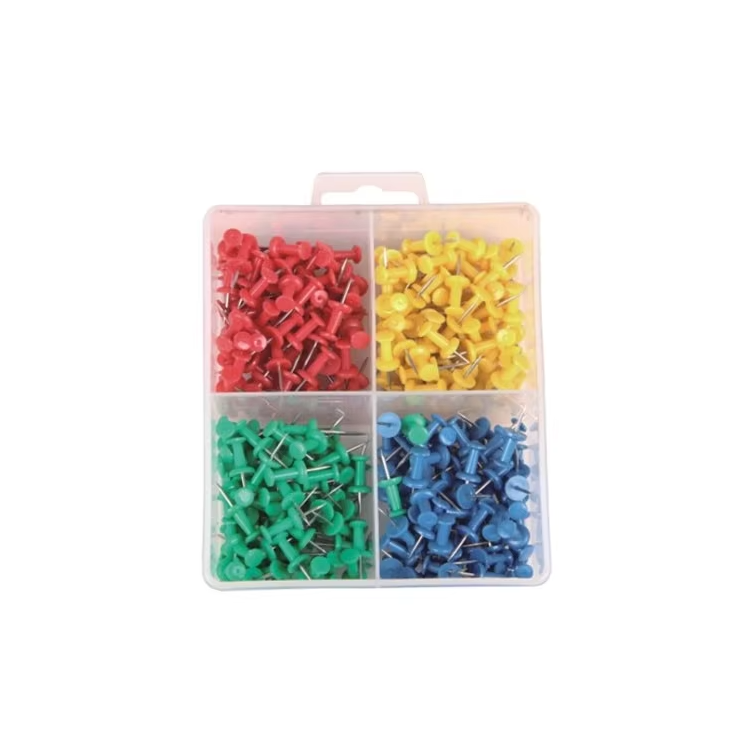
Why Push Pins Still Earn Wall Space
Digital reminders are useful, but a wall of notes creates awareness a phone screen rarely matches. A Push Pin is small, cheap, and instantly readable. No battery, app, or login is required. That matters in shared offices, workshops, classrooms, and home studios where several people need the same information at a glance.
Dual coding theory, popularized by psychologist Allan Paivio, suggests that pairing words with spatial cues can improve recall. A note pinned near a door or above a packing bench becomes part of the room. The location carries meaning.
The trick is not buying a box of pins and stabbing paper into drywall. Surface choice, pin geometry, note weight, and layout discipline decide whether a simple board works.
Choose the Backing Surface Before the Pin
The surface decides how long a display lasts. Cork grips steel shafts and hides small holes. Foam board is lighter and cheaper, but it can crush. Fabric-covered panels look cleaner in client areas, yet loose weave lets notes sag. Drywall is the worst default. It accepts a pin, but repeated use leaves a rash of holes and paper often tears free.
For humid areas, closed-cell PVC foam board or a laminated panel holds up better than natural cork. Metal cabinets and painted steel doors need magnetic clips or adhesive holders, since pins will not penetrate.
Mount a dedicated backing board instead of pinning directly into the building. That keeps the wall intact and makes the display easy to move. Damage-free adhesive strips can hold a lightweight board, though the adhesive may fail on dusty paint. Test a small patch first.
A Layout That Lets Notes Do Their Job
A crowded board turns into wallpaper. The eye stops sorting, and important notes disappear. Divide the board into zones with clear purposes:
-
A current action zone for tasks due this week.
-
A reference zone for phone lists, schedules, and part numbers.
-
A review zone for ideas that need a decision.
Two or three accent colors are usually enough. One for urgent items, one for pending approvals, and one for general reference. Notes should be replaced when handled, not left to curl. A weekly five-minute cleanup keeps the system honest.
Spacing also matters. Leave a finger-width gap between notes. Align rows loosely rather than forcing perfect grids, because real notes come in different sizes. Fast scanning is the goal, not decoration. If a note cannot be understood from two steps away, it needs larger text or a shorter message.
Match Pin Geometry to Paper and Traffic
Not every push pin behaves the same way. Head size affects grip, shaft length affects holding power, and finish affects corrosion resistance. A pin that works on copy paper may fail on a laminated card or a stack of fabric swatches.
| Pin style | Typical head size | Shaft and finish | Works well for | Watch-outs |
|---|---|---|---|---|
| Plastic-head push pin | 9 to 12 mm | Nickel-plated steel | Daily notes on cork or foam board | Heavy cardstock can slip if the shaft is short |
| Flat metal thumb tack | 8 to 10 mm | Plain steel | Low-profile labels and tight grids | Hard to grip, rust risk in damp rooms |
| Long-shaft push pin | 10 to 14 mm | Stainless or brass | Fabric panels and thick paper stacks | Leaves larger holes in soft boards |
| Decorative clamp pin | 12 to 16 mm | Spring steel with coating | Photos and layered cards | Bulkier head can crowd dense layouts |
For high-traffic boards, a longer shaft and wider plastic head reduce fallen notes when doors slam or vents blow. In damp rooms, stainless or brass finishes are worth the extra cost. Standard nickel-plated steel is fine for dry offices, but it can spot and rust when humidity stays high. Thin receipt paper curls quickly, while 90 lb cardstock may need a pin pushed at a slight angle.
Lessons from a Humid Plant Office Retrofit
During a retrofit at a chemical plant office in southern China, the project team found that existing corkboards had become a maintenance problem. Humidity often sat above 75 percent. Standard steel pins rusted within weeks, and notes near the loading desk kept dropping. The cork had swollen and developed dark spots.
The team replaced cork with sealed PVC foam boards, switched to stainless steel push pins in the dampest zones, and moved the main display away from a direct air vent. Notes were sorted into three lanes: shift handover, safety reminders, and supplier paperwork. The board was checked at the end of every shift.
The result was a display that stayed readable without daily fuss. The board still needed occasional pin replacement, and very heavy binders moved to a shelf. Pin selection and backing material mattered more than the board brand. In humid sites, corrosion resistance is not a luxury. It separates a working display from a pile of fallen paper.
Buying Push Pins and Display Hardware Without Guesswork
Sourcing small hardware looks simple until mixed sizes, inconsistent plating, and weak blister packaging cause returns. A useful purchase spec should define shaft length, head diameter, finish, point sharpness, and packaging material. For retail or workshop kits, the blister card matters as much as the pin. PS, PP, ABS, and PVC blister options behave differently under shipping stress and store lighting.
ISO 9001:2015 is a common baseline for quality management systems. It gives buyers a framework for process control, traceability, and corrective action.
For buyers assembling DIY hardware assortments, Zhongsheng has been active since 1993 and offers manufacturing and supply support for blister-packed hardware sets. The company works with multiple plastic materials and can produce according to client requirements. That experience helps when a display project needs pins, clips, and packaging that arrive consistent and ready for the shelf.