 EN
EN

Why Vibration Control Starts at the Contact Point
Vibration rarely stays where it starts. A motor mount, pump foot, compressor bracket, or control panel frame can turn a small cyclic force into noise, fatigue cracks, and loose fasteners. A rubber washer is one of the simplest ways to interrupt that path. The part looks ordinary, but its job is precise: sit between harder surfaces, deform under load, and absorb energy that would otherwise travel through steel.
How a Rubber Washer Turns Motion Into Heat
The working principle is viscoelasticity. When a rubber washer is compressed and released thousands of times per minute, polymer chains slide, stretch, and rub against fillers. Internal friction converts part of that mechanical energy into low-grade heat. This is hysteresis damping. Two numbers matter in technical discussions: dynamic stiffness and loss factor, often written as tan delta. A higher loss factor means more energy is dissipated per cycle. The washer also changes the joint's natural frequency. Adding compliance lowers assembly stiffness, which can move a resonance away from the machine's running speed or blade-pass frequency. That shift explains why a small elastomeric part can quiet a rattle or hum.
Material Choice Matters More Than Color
Not every rubber washer behaves the same. Temperature, oil, ozone, and compression set all affect performance. ASTM D2000 and SAE J200 provide standardized line call-outs for rubber compounds. ISO 4664 covers dynamic properties of vulcanized rubber. Those standards help buyers compare materials instead of relying on color alone.
| Material | Typical temperature range | Oil resistance | Vibration damping | Common fit |
|---|---|---|---|---|
| EPDM | -40 F to 250 F | Poor to fair | Good | Outdoor brackets, water pumps |
| Nitrile (NBR) | -30 F to 220 F | Good | Fair to good | Oil pans, fuel systems |
| Neoprene (CR) | -40 F to 230 F | Fair | Good | HVAC, marine, general mounts |
| Silicone | -60 F to 400 F | Fair | Fair | High-temp panels, enclosures |
| Butyl | -40 F to 200 F | Poor | Very good | Noise-sensitive mounts |
Hardness matters too. A 40 Shore A washer compresses easily and isolates low-frequency movement, but it can tear under high bolt load. A 70 Shore A washer carries more load and resists extrusion, yet it transmits more vibration. The right choice depends on load, frequency, and the consequences of loosening.
Installation Details That Decide Performance
A good washer can be defeated by a bad installation. The most common mistake is over-tightening. Rubber is nearly incompressible in volume, so excessive torque squeezes the material outward, reduces elastic travel, and creates permanent set. Once flattened, the washer acts more like a hard shim than a damper.
-
Match washer thickness to expected movement. Thin washers save space but offer little deflection.
-
Use flat metal washers above and below the rubber washer when bolt load is high.
-
Check clearance around the hole so the rubber can bulge slightly without binding.
-
Recheck torque after the first heat cycle or a few days of operation.
-
Keep oil, ozone, and UV exposure in mind.
During a retrofit at a chemical plant in southern China, a maintenance crew chased vibration that kept loosening bolts on a reciprocating compressor skid. The original setup used plain steel washers. Replacing them with 60 Shore A EPDM rubber washers and correcting bolt torque reduced the sharp vibration felt at the base frame. The crew also found that lines near a steam header needed silicone or metal alternatives because surface temperatures exceeded EPDM's practical range. Material and location decided the result.
Where a Rubber Washer Helps and Where It Does Not
A rubber washer works well in bolted joints, panels, brackets, and light-duty mounts where the goal is reducing structure-borne noise and small-amplitude vibration. It can also provide some electrical isolation between dissimilar metals. Limitations deserve equal attention. Rubber washers are not a substitute for balancing, alignment, or bearing replacement. They can creep under sustained load and may swell in contact with certain oils, fuels, or solvents. In high-temperature or high-pressure joints, a metal washer, spring washer, or engineered polymer isolator may be safer. Adding compliance can also increase motion at the joint. If the bolt cannot tolerate that movement, a different isolation strategy is needed.
Sourcing Consistent Washers for Real Machinery
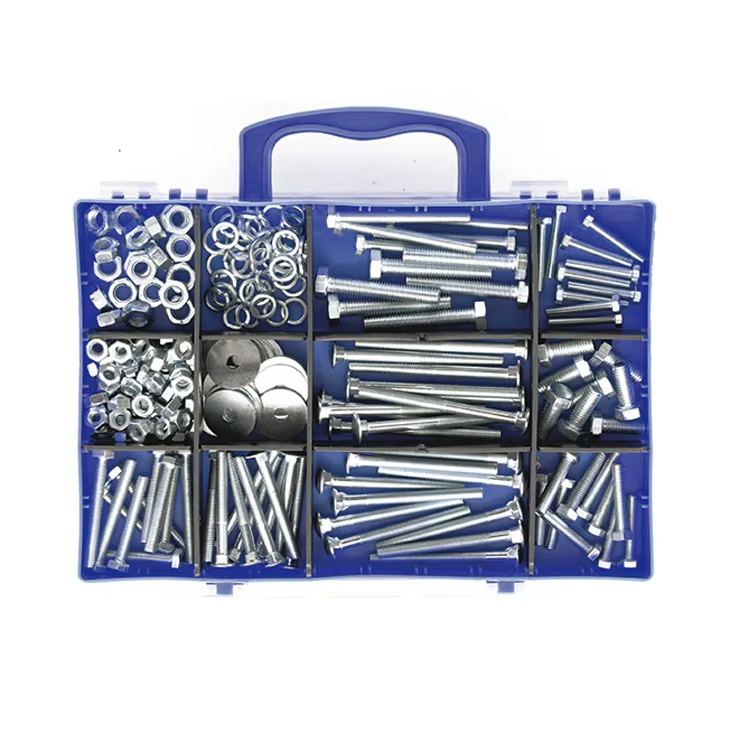
Consistency is the quiet requirement behind every vibration fix. A maintenance team may solve a problem once, then lose the gain when a replacement washer arrives with different hardness, thickness, or compound. Lot-to-lot variation in rubber parts often comes from cure time, filler content, and storage conditions. Buyers who treat washers as generic consumables often pay for it later in rework and downtime. For hardware assortments that combine rubber washers with screws, nuts, and anchors, Zhongsheng has focused on practical manufacturing and packaging since 1993. Experience with PS, PP, ABS, and PVC blister boxes helps distributors and service teams keep parts organized, traceable, and ready for field use. A washer is a small item, but a reliable supply of the right one keeps vibration control from becoming a recurring surprise.