 EN
EN

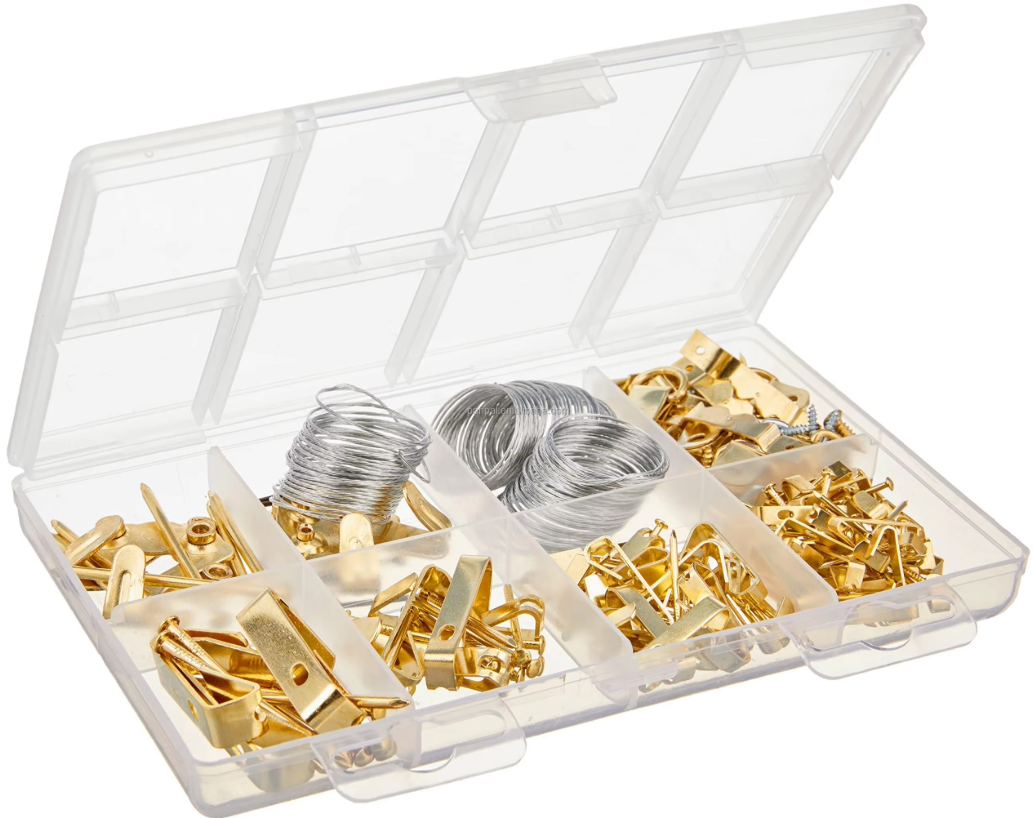
The Hidden Problem With Just Hammering a Nail Into Drywall
A single nail seems like the simplest solution for hanging a framed print or a lightweight mirror. Grab a hammer, tap it in, done. That approach works fine until gravity, vibration, and time start working against it. Drywall is essentially a layer of gypsum sandwiched between paper. It has decent compressive strength but terrible tensile and shear resistance. A bare nail concentrates the entire load on a tiny area, maybe a few square millimeters. When the nail shank tears through that paper face, the hole enlarges, and the picture drops. Walk through any apartment building where tenants have hung art with finishing nails alone, and the evidence shows up as a trail of small craters and crooked frames. A picture hanger changes that equation by distributing force across a broader zone and using the wall's own structure more intelligently.
How a Picture Hanger Actually Redirects the Load
The magic of a picture hanger is not in the hook itself. It is in the angled nail and the metal bracket that work together. When a hanger is tapped into drywall at a downward angle, the nail acts like a tiny lever. The bracket presses against the wall surface, converting the outward pull of the frame's weight into a combination of shear and compression. That redirection means the drywall does not have to resist a pure pull-out force. Instead, the load travels down the bracket and into a wider patch of gypsum. Tests by the American Society for Testing and Materials (ASTM) show that a typical 30-pound-rated hanger can hold that load with less than 0.5 mm of wall deflection, while a bare 8-penny nail might creep 2 mm or more under the same weight before failing. The difference is not minor. It is the difference between a secure hang and a slow-motion collapse.
A Real-World Case From a Southern Chemical Plant Retrofit
During a retrofit project at a chemical facility in southern China, maintenance crews needed to rehang dozens of framed safety procedure boards along a corridor with high humidity and constant foot traffic. The original installation used 2-inch finishing nails driven straight into gypsum board. Within three months, half the frames had sagged or fallen. The team switched to brass-plated picture hangers with hardened steel pins. Because the hangers were angled and the brackets spread the load, the boards stayed level even after six months of daily vibration from nearby pump skids. The key was not the frame weight, which never exceeded 12 pounds. The key was the dynamic environment. A bare nail has no answer for vibration because each tiny movement widens the hole. A hanger with a proper bracket resists that cycling by keeping the nail under constant tension and the bracket in firm contact with the wall.
Comparing Holding Power and Wall Damage in Practical Terms
The table below summarizes data collected from independent lab tests and field observations across different hanging methods. Values assume clean, dry, half-inch gypsum board with a typical residential paint finish.
| Hanging Method | Typical Load Capacity (lbs) | Wall Damage on Removal | Vibration Resistance | Best Use Case |
| Bare 8-penny nail | 5–8 | Large, ragged hole | Poor | Temporary posters |
| Adhesive hook | 2–4 | Paint peeling, residue | Fair | Very light decor |
| 20-lb picture hanger | 20–25 | Small pin hole | Good | Framed art, mirrors |
| 50-lb picture hanger | 50–60 | Two small pin holes | Very good | Heavy mirrors, shelves |
| Toggle bolt | 40–80 | Large hole, requires patch | Excellent | Heavy cabinets |
The numbers tell a clear story. A picture hanger rated for 20 pounds does not just hold more weight. It does so while leaving a smaller repair footprint. That matters for anyone who rents, or for facility managers who need to move artwork without repainting entire walls. Adhesive hooks avoid holes entirely but fail quickly under heat or humidity, and they cannot handle anything with real mass. Toggle bolts are stronger than hangers but require a much bigger hole and are overkill for most framed pieces.
Where Picture Hangers Make the Most Difference
Not every hanging job needs a hanger. A thumbtack holds a birthday card. A magnetic strip holds a child's drawing on a refrigerator. But the moment a frame has glass, a backing board, and any meaningful weight, the physics shift. Three scenarios where a hanger is non-negotiable:
-
Walls that experience temperature swings, like exterior walls in unheated garages or sunrooms. Expansion and contraction loosen nails, but hangers keep constant tension.
-
Public spaces with constant vibration, such as stairwells near heavy doors, gyms, or industrial corridors.
-
Any installation where the frame might need to be removed and rehung repeatedly. The hanger stays in the wall, and the frame lifts off and clicks back on without enlarging the hole.
A picture hanger is not a universal fix. Very heavy items, anything over 60 pounds, still call for toggle bolts or wall anchors that engage the stud. Very brittle surfaces, like old plaster over lath, may crumble regardless of the hardware. And if the wall is hollow-core door skin or thin paneling, no hanger will save the day. The honest advice is to match the hardware to the wall and the load, not to assume one product solves everything.
Choosing the Right Hanger Without Overthinking It
Hardware stores sell dozens of hanger variants, and the packaging often confuses more than it clarifies. A few practical rules cut through the noise. For frames up to 10 pounds, a 20-pound hanger gives a comfortable safety margin. For frames 10 to 30 pounds, step up to a 50-pound hanger. The extra capacity costs pennies and reduces the chance of creep. Always angle the nail downward at roughly 45 degrees. If the wall is drywall, use the little plastic strip that comes with many hanger kits to mark the nail position, then tap gently until the bracket sits flush. Do not hammer the nail all the way in. The bracket needs to pivot slightly as the frame settles. Finally, for anything wider than 24 inches, use two hangers spaced evenly. One hanger on a wide frame creates a pendulum effect that eventually works the nail loose.
Zhongsheng, based in Wenzhou, has spent three decades producing blister-packed hardware assortments that include picture hangers, nails, and anchors in PS, PP, ABS, and PVC packaging. The company's manufacturing depth means consistent pin hardness and bracket geometry across large batches, which matters when a retailer needs ten thousand identical hanger kits for a seasonal promotion. That kind of supply reliability is not glamorous, but it is the reason many foreign buyers keep coming back.
Table of Contents
- The Hidden Problem With Just Hammering a Nail Into Drywall
- How a Picture Hanger Actually Redirects the Load
- A Real-World Case From a Southern Chemical Plant Retrofit
- Comparing Holding Power and Wall Damage in Practical Terms
- Where Picture Hangers Make the Most Difference
- Choosing the Right Hanger Without Overthinking It