 EN
EN

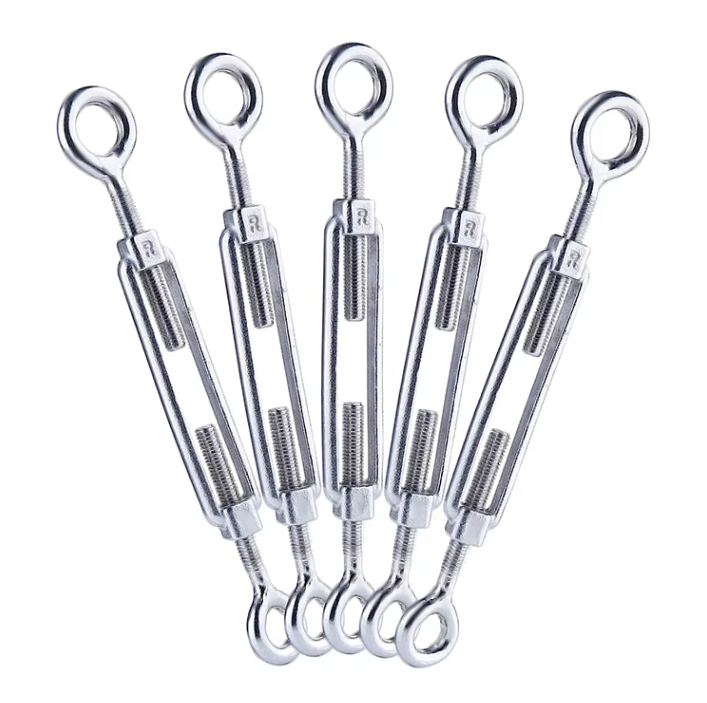
Forged Eye Bolts Solve a Different Kind of Lifting Problem
Heavy lifting rarely fails because a crane is too small. The weak point is often a connection that looked fine in a catalog but was never built for shock, side pull, or repeated cycling. A forged eye bolt closes that gap by starting as one piece of steel shaped under heat and pressure. No weld needs inspection and no assembly can loosen. The load path is simpler, so fewer hidden variables reach the site.
A hardware store eye bolt, a welded D-ring, and a forged eye bolt can look similar after paint. Under a load chart, they behave differently. Forged versions usually use carbon or alloy steel with continuous grain structure. That structure resists cracking at the shoulder and thread root.
Grain Flow and Why It Matters More Than a Pretty Finish
Forging pushes the steel's internal grain along the eye, shank, and threads. The flow is continuous instead of chopped or interrupted. In a welded eye bolt, the heat affected zone can become a weak link if the weld is undercut, porous, or not stress relieved. Cast porosity can hide below the surface. Forging does not make a part indestructible, but it lowers the chance of internal discontinuities.
Dynamic lifts expose the difference. A shifting, jerking, or swinging load sends stress waves through the connection. Fatigue cracks prefer sharp transitions and stress risers. A forged eye bolt with a generous fillet and a well formed thread root gives cracks fewer places to start. ASME B30.26 covers identification, proof load, and inspection requirements. It gives buyers and inspectors a common baseline.
Forged Versus Welded and Cast Hardware in Real Load Paths
The table compares common eye bolt constructions. Values vary by material and size, so use it as a guide, not a substitute for a load chart.
| Feature | Forged eye bolt | Welded eye bolt | Cast eye bolt |
|---|---|---|---|
| Grain structure | Continuous flow | Interrupted by weld | Random with porosity |
| Failure risk | Thread root, shoulder | Weld toe, undercut | Internal voids |
| Fatigue response | Predictable when rated | Sensitive to weld quality | Variable and hard to verify |
| Inspection | Cracks, thread damage | Weld inspection needed | Hidden surface flaws |
| Traceability | Marked with load limit | Depends on fabricator | Depends on batch control |
A southern chemical plant replacement showed the point. A crew used welded eye pads to pull a skid through a congested pipe rack. After several shifts of jerking the load free, a weld toe cracked. The crew switched to forged eye bolts with matched shoulders and verified thread engagement. The connection stopped being the unpredictable part.
Matching Threads, Shoulders, and Angles to the Lift
Installation decides whether a forged eye bolt performs as rated. Three details deserve attention before the first pick.
-
Thread engagement. The bolt needs enough engaged threads to develop rated capacity. A nut tacked onto thin plate is not the same as a tapped block with full thread depth.
-
Shoulder contact. The shoulder should sit flat against a clean surface. Paint, weld spatter, or a crooked hole can concentrate load on one side of the eye.
-
Load direction. Eye bolts are often rated for a specific direction. Angular pulls reduce capacity, and a swinging load can turn a straight pull into a side load.
Swivel and non-swivel designs also change behavior. A swivel eye bolt can align with the load and reduce bending, but it adds a joint that must be inspected. A non-swivel eye bolt is simpler and often stronger in a fixed direction. The right choice depends on the lift path, frequency of use, and consequences of failure.
Inspection, Traceability, and Where Forged Eye Bolts Fit
Inspectors look for bending, elongation, cracks, worn threads, and corrosion pitting. An overloaded forged eye bolt may stretch, distort, or crack at the thread root. Once that happens, the part should be removed from service. Reheating, welding, or straightening a damaged eye bolt is not a repair. It creates a new and unrated part.
Traceability matters too. A marked working load limit, grade, size, and manufacturer code lets a site confirm that the right hardware is in the right place. ASME B30.26 also emphasizes periodic inspection and documentation. A missing tag does not make a forged eye bolt weak, but it can make a lift plan hard to defend.
Forged eye bolts fit heavy lifting, pulling, tie down, and rigging points where shock, vibration, or repeated use are common. They are not a universal answer. Extreme corrosion, unusual geometry, or very high cycle fatigue may need a different engineered solution. The working load limit can still be reduced by angular loading, poor thread engagement, or damage.
For buyers, treat eye bolts as safety hardware, not commodity fasteners. Check material grade, dimensions, markings, and batch consistency. Zhongsheng Hardware has manufactured and supplied DIY hardware assortments since 1993, including blister packaging with PS, PP, ABS, and PVC, and can produce to client requirements. Its long production history and quality control focus make it a practical source for foreign buyers who need consistent hardware sourcing.