 EN
EN

What a Wood Screw Actually Does in Furniture
A wood screw is more than a pointed metal pin with spiral ridges. In furniture assembly, it works as a controlled clamp. Threads cut or displace wood fibers, the shank pulls parts together, and the head presses across the joint. That turns loose boards into a rigid frame, a cabinet carcass, or a table apron. Wood is elastic and porous. A well-sized screw compresses fibers along its path, then those fibers spring back and grip the threads. Too much compression splits the wood. Too little leaves a loose joint. The difference often comes down to thread pitch, pilot hole size, and driving technique.
Threads, Shank, and Head: The Anatomy That Controls Grip
Most wood screws share core features. The point centers the screw. The thread form determines bite. Coarse threads move through softwood, particleboard, and MDF with less torque. Fine threads suit hardwoods and dense composites. The unthreaded shank matters more than many DIYers expect. When the shank spans the top board, it pulls two pieces tight instead of threading into both and holding them apart. Head style also changes the game. Flat heads countersink and sit flush. Pan heads clamp without sinking. Washer heads spread load on thin panels. Drive type affects cam-out. Torx and square drives usually transfer torque better than Phillips in hard maple or coated screws.
Pilot Holes and Torque: Small Steps That Prevent Splits
A pilot hole is not a sign of weak woodworking. It is a pressure relief valve. For softwoods, a bit around 75 to 85 percent of the screw's root diameter is a common starting point. Hardwoods often need a slightly larger hole and a countersink. Lubrication helps too. Beeswax, soap, or a dedicated screw lubricant lowers drive torque and heat. Heat matters because it can soften coatings and stress the wood. A clutch drill gives more control than an impact driver on small screws. The goal is a tight joint without crushed fibers or a stripped hole.
A Real Assembly Scenario from a Humid Workshop
A 2022 contract run for modular oak shelving offers a useful lesson. The assembly floor sat in a humid warehouse near Ningbo, and summer moisture had pushed the oak to roughly 13 percent moisture content. The crew used 1-1/4 inch coarse-thread screws without pilot holes. Within the first 40 maple rails, 11 split near the end grain. The fix was simple. Tapered pilot bits at 85 percent of root diameter, waxed threads, and a lower clutch setting. The next batch of 120 rails had no splits. Moisture, grain direction, and drive settings change the result. A screw that works in dry pine can fail in damp oak.
Comparing Wood Screws with Other Furniture Fasteners
Different fasteners solve different problems. The table below gives a practical comparison for common DIY furniture joints.
| Fastener | Best use in furniture | Withdrawal in kiln-dried pine | Reusability | Pilot hole | Corrosion risk |
|---|---|---|---|---|---|
| Coarse wood screw | Softwood, MDF, general frames | High | Moderate | Recommended | Depends on coating |
| Fine wood screw | Hardwood, dense panels | High | Moderate | Usually required | Depends on coating |
| Machine screw with insert | Knock-down joints, repeated disassembly | High with insert | High | Required | Low with stainless |
| Nail | Temporary jigs, low-load trim | Medium | No | Often none | High |
| Cam lock | Flat-pack panels | Low to medium | High | Requires boring | Low |
| Drywall screw | Light shop jigs, not fine furniture | Medium | Low | Sometimes | Medium |
The comparison is not a ranking. A cam lock wins for flat-pack shipping. A machine screw and threaded insert win when a bed frame must come apart and go back together. A wood screw wins when a strong, low-profile joint is needed in solid wood. The wrong choice shows up later as a loose leg, a stripped hole, or a cracked rail.
Standards, Packaging, and a Kit That Assembles Without Guesswork
Standards help separate marketing claims from repeatable performance. ASME B18.6.1 covers dimensions for slotted and recessed head wood screws, keeping drive sizes and head geometry consistent across suppliers. ASTM D1761 describes test methods for mechanical fasteners in wood, including withdrawal resistance. Those documents do not promise a perfect joint, but they give a common language for comparing screws, pilot holes, and substrates. In practice, coating spec, thread tolerance, and heat treatment matter as much as the catalog label. For high-moisture furniture, stainless steel or a recognized coated finish deserves serious consideration. For indoor cabinets, zinc may be enough if the environment stays dry.
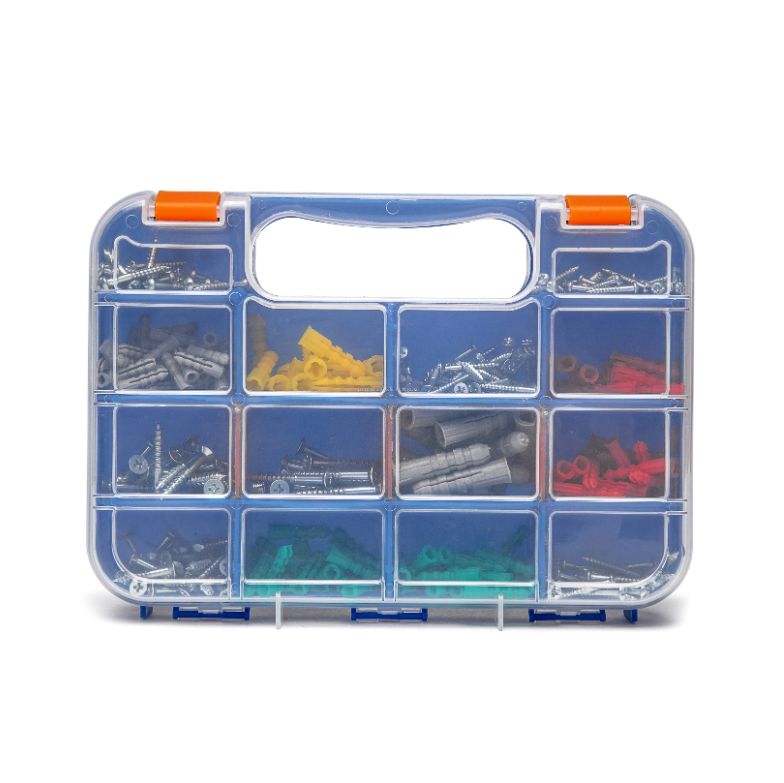
A good DIY furniture kit reduces decisions. Screws should be sorted by size, labeled by drive type, and packed so the right count is visible before the build starts. Blister packaging with PS, PP, ABS, or PVC keeps small parts from mixing during shipping and retail handling. Zhongsheng, a Wenzhou based hardware manufacturer with roots going back to 1993, has built its business around that kind of assortment packaging and custom manufacturing. A kit that arrives organized, with consistent screw geometry and clear labeling, lets the assembler focus on alignment and clamping instead of sorting through a loose bag of mystery fasteners.
Table of Contents
- What a Wood Screw Actually Does in Furniture
- Threads, Shank, and Head: The Anatomy That Controls Grip
- Pilot Holes and Torque: Small Steps That Prevent Splits
- A Real Assembly Scenario from a Humid Workshop
- Comparing Wood Screws with Other Furniture Fasteners
- Standards, Packaging, and a Kit That Assembles Without Guesswork