 EN
EN

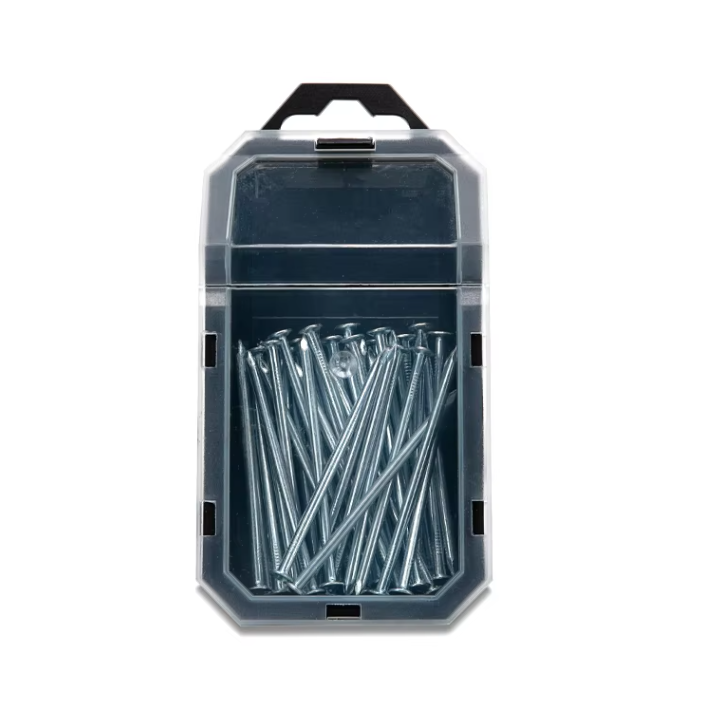
A Hammer Drill Is a Drilling Tool, Not a Nail Gun
A hammer drill gets confused with a nail gun far too often. The tool spins a bit while a piston pulses forward, crushing concrete at the tip and clearing dust. That action suits masonry bits. It does not drive a concrete nail. A concrete nail is a hardened fastener made to be struck into brick, block, or concrete. Some styles have fluted shanks, some are galvanized, and some carry a flat head for framing clips. A hammer drill can help before the nail goes in by opening a pilot hole. It does not replace a hammer, a setting tool, or a powder actuated tool. The wrong mode or a worn bit can burn the tip, widen the hole, and leave a nail that pulls out under load.
Matching the Concrete Nail to the Base Material
Base material decides almost everything. Old, soft brick can often take a concrete nail straight from a hammer. Hard poured concrete with aggregate may bend the nail before it bites. Lightweight block can crumble around the shank. A common field rule is simple: test one fastener in a hidden spot before running a full line. The nail should pass through the fixture and embed into the base without bottoming out. For a 2 inch nail through a 3/4 inch wood strip, roughly 1-1/4 inches of embedment is a practical target. Thin substrates, hollow block, and cracked concrete need a different anchor, such as a sleeve anchor or a screw with a nylon plug. No single concrete nail fits every wall.
| Base material | Concrete nail fit | Pilot hole | Driving method | Main risk |
|---|---|---|---|---|
| Soft brick | Good | Often none | Hand hammer | Crushed face |
| Lightweight block | Poor | Not advised | Sleeve anchor | Pull out |
| Hard concrete | Fair | Bit 1/16 inch smaller | Hammer or setting tool | Bent nail |
| Cracked concrete | Poor | Not advised | Adhesive anchor | Crack growth |
Pilot Holes: When a Hammer Drill Helps and When It Hurts
A pilot hole can reduce splitting and help a nail enter hard concrete. The hole must be smaller than the nail diameter, otherwise the nail has no interference fit. As a starting point, use a carbide bit about 1/16 inch smaller than the nail shank. Drill in hammer mode only while the masonry bit is in the chuck. Switch to rotation only if the drill has a screw mode and a driver bit is installed. Keep the bit perpendicular. A wandering hole creates a loose nail. Drill about 1/4 inch deeper than the embedment. Blow out the dust with a bulb or vacuum. Do not use compressed air at high pressure near the face, since it can polish the hole wall. The nail needs friction, not clearance.
Driving the Nail Without Bending It
Once the hole is ready, the concrete nail still needs a controlled strike. A 2 to 4 pound hammer works for many small nails. A setting tool with a recessed tip keeps the hammer from slipping off the head. Start with light taps to seat the nail. Then increase force and keep the hammer face parallel to the nail head. Bent nails usually come from a glancing blow or from hitting aggregate. If a nail starts to curve, stop and pull it. Driving a bent nail deeper only damages the hole. Powder actuated tools drive hardened pins with a cartridge, but they require training and eye protection. The actual setting comes from a hammer or a dedicated driver.
Field Lessons from a Chemical Plant Retrofit
A 2021 retrofit at a chemical plant in southern China showed how small drilling choices change the result. The crew was fastening cable tray clips to a C40 concrete wall with 50 mm concrete nails. The first plan used a worn 5 mm bit in a hammer drill, then a hand hammer. After 30 clips, several nails pulled loose during a pull test. The hole had opened to nearly 6 mm, so the shank had almost no bite. The fix was not complicated. New 4.5 mm carbide bits, a depth stop, and a fresh bit every 40 holes brought the holes back into range. A dull bit in hammer mode can turn a tight hole into a smooth tube.
Standards, Testing, and Smart Packaging for Jobsite Use
Standards give buyers a way to compare driven fasteners. ASTM F1667 covers nails, spikes, and staples, including dimensions and material classes, which helps separate a true masonry nail from a general purpose nail. ASTM E488 describes test methods for anchors in concrete, and it is often used to check pull out performance after installation. Neither standard makes a bad hole good. They simply define the test. For buyers, coating, shank design, point geometry, and hardness matter as much as the label. Mixed sizes in a clear blister pack save time, and PS, PP, ABS, or PVC boxes keep nails dry and sorted. Zhongsheng, a Wenzhou hardware manufacturer active since 1993, builds its supply around that kind of assortment packaging and custom manufacturing. A well organized kit cannot fix a wrong pilot hole, yet it keeps the right fastener within reach.