 EN
EN

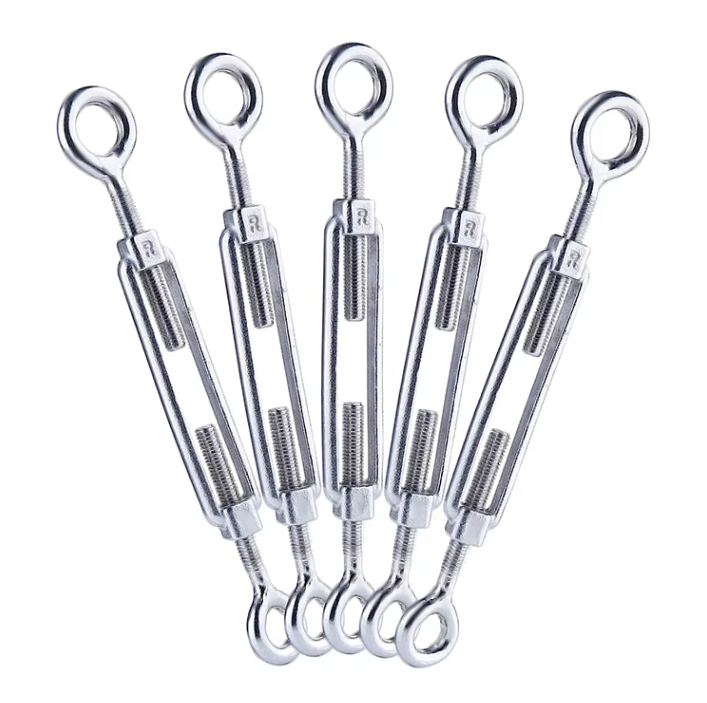
What the Working Load Limit Actually Means on an Eye Bolt
An eye bolt is a rigging component, not a generic threaded ring. Its working load limit, or WLL, is the maximum load the manufacturer permits in a specific application. WLL is not breaking strength. A forged carbon steel eye bolt may break at five times its WLL, but that margin protects against wear, dynamic load, and minor errors. ASME B30.26, the rigging hardware standard, expects hardware to carry a rated load mark and be used within that rating. If the mark is gone, treat the part as unknown. A no-name eye bolt with shiny threads is still a question mark.
Why Threads, Shoulders, and Installation Decide Real Capacity
Two eye bolts with the same shank size can have different ratings. A plain nut eye bolt is generally for vertical lifts only. The threads take the load, and side pull bends the shank. A shoulder eye bolt has a machined shoulder that seats against the mounting surface. That shoulder allows angular loading, but only when it sits flush and stays tight. A shoulder floating above the plate turns the shank into a lever. Thread engagement also matters. In steel, one times the bolt diameter is a common minimum. In aluminum or cast iron, deeper engagement or a through-bolt with a nut is safer. Follow the maker's torque value. Loose hardware can unscrew, and over-torqued hardware can crack at the eye.
How Load Angle Changes the Safe Rating
Reading an axial WLL and using it for a side pull is a classic field error. Eye bolts are strongest when the load runs in line with the shank. As the angle increases, capacity drops. A shoulder eye bolt can take some angle. A non-shouldered eye bolt should not be used for angled lifts, because bending stress concentrates at the thread root.
| Nominal Size | Axial WLL at 0 degrees | WLL at 45 degrees | WLL at 90 degrees | Typical Design Factor |
|---|---|---|---|---|
| 1/4 in | 650 lb | 455 lb | 195 lb | 5:1 |
| 5/16 in | 1,000 lb | 700 lb | 300 lb | 5:1 |
| 3/8 in | 1,500 lb | 1,050 lb | 450 lb | 5:1 |
| 1/2 in | 2,600 lb | 1,820 lb | 780 lb | 5:1 |
| 5/8 in | 4,000 lb | 2,800 lb | 1,200 lb | 5:1 |
| 3/4 in | 5,200 lb | 3,640 lb | 1,560 lb | 5:1 |
| 1 in | 8,000 lb | 5,600 lb | 2,400 lb | 5:1 |
Those numbers are typical published values for forged carbon steel shoulder eye bolts. They are useful for planning, but the tag on the actual hardware always wins. A different material, coating, thread class, or manufacturer can shift the numbers.
A Field Lesson from a Chemical Plant Retrofit
During a retrofit at a chemical plant in the southern United States, a crew used 1/2 in forged shoulder eye bolts to lift a pipe section and a small heat exchanger skid. The axial load looked fine on paper. A pre-lift check found one shoulder sitting about 3/16 in above the mounting plate. The rigging angle was also closer to 45 degrees than the planned vertical pick. Effective capacity was far below the catalog number. The crew stopped, cleaned the seat, added the correct hardened washer, and switched to a larger shoulder eye bolt with a verified WLL. No injury happened, but the near miss showed that an eye bolt rating is a system rating. Mounting surface, hole chamfer, thread condition, and lift angle all join the math.
Standards and Inspection Points That Keep Ratings Honest
ASME B30.26 covers rigging hardware and calls for identification, rated loads, and proof load testing. ASTM A489 addresses carbon steel eyebolts, and ASME B18.15 covers forged eyebolt dimensions. Those standards do not replace a hands-on check. Before every lift, look for cracks, bent shanks, stretched threads, gouges, corrosion, and missing marks. Run a nut down the threads by hand. If it binds, the threads may be damaged. Check that the shoulder seats fully. Confirm the load will not rotate the eye bolt or side-load the threads. A 5:1 design factor is common in rigging hardware, but it assumes the part is used as intended. It does not cover shock loading, off-angle pulls, or a mounting surface that crushes under load.
Matching Eye Bolt Ratings to Real Jobs and Supply Needs
Choosing an eye bolt starts with the load, but it does not end there. Diameter, material, thread length, shoulder style, finish, and documentation all matter. A stainless steel eye bolt may resist corrosion in a washdown area, yet its WLL may be lower than a comparable forged carbon steel part. Buyers who need retail-ready hardware often want eye bolts packed with related assortment items in PS, PP, ABS, or PVC blister boxes. Zhongsheng Hardware has been manufacturing and supplying DIY hardware assortments since 1993, with plastic-absorbing packaging and custom options for foreign buyers. The practical advantage is a supply chain that understands both the metallurgy and the shelf. For anyone comparing eye bolt suppliers, rated capacity, thread quality, and packaging need to arrive consistent from one order to the next.
Table of Contents
- What the Working Load Limit Actually Means on an Eye Bolt
- Why Threads, Shoulders, and Installation Decide Real Capacity
- How Load Angle Changes the Safe Rating
- A Field Lesson from a Chemical Plant Retrofit
- Standards and Inspection Points That Keep Ratings Honest
- Matching Eye Bolt Ratings to Real Jobs and Supply Needs