 EN
EN

Why a Tiny Eye Screw Solves More Problems Than It Looks
An eye screw looks almost too simple to matter. A threaded shank, a closed loop, and a small shoulder between them. That basic shape turns wood, anchors, and brackets into dependable attachment points for plants, tools, lights, cables, and seasonal decor. Hardware aisles often mix terms such as eye hooks, screw eyes, and lag eye screws, and the differences matter. A light-duty eye screw for a curtain tieback does not share the same load path as a forged eyebolt used in rigging. Material choice shifts the job too. Zinc-plated carbon steel handles indoor storage and painted trim. Type 304 stainless steel holds up in humid basements and coastal air. Type 316 stainless steel makes more sense where salt spray or washdown chemicals are common. Brass versions appear in visible decor because the finish ages gracefully. The real challenge is not finding a use. It is matching the screw to the substrate and the direction of the load.
Matching Eye Screw Size to the Real Weight and Substrate
Sizing starts with the wood or anchor, not with the hook in a product photo. A #6 eye screw may be perfect for a lightweight curtain pull, while a 1/4-inch lag eye screw belongs in a ceiling joist supporting a hammock chair. Pilot holes prevent splitting and reduce driving torque. Too small a pilot hole cracks softwood near end grain. Too large a pilot hole strips threads and cuts holding power. The USDA Forest Service Wood Handbook notes that screw withdrawal strength rises with wood density and embedment depth, which explains why the same eye screw feels stubborn in oak and loose in low-density pine. The table below reflects common shop practice, not a substitute for engineering calculations. Drywall needs a toggle anchor or a wood stud. A plastic expansion anchor alone is a poor choice for anything overhead. Concrete usually calls for a sleeve anchor or drop-in anchor, with a dedicated eye nut rather than a small decorative eye screw.
| Eye screw size | Typical shank diameter | Pilot hole in softwood | Pilot hole in hardwood | Common home use |
|---|---|---|---|---|
| #6 x 1 in | 0.138 in | 3/32 in | 7/64 in | Curtain tiebacks, light plant hangers |
| #8 x 1-1/4 in | 0.164 in | 7/64 in | 1/8 in | Key racks, cable guides, small lanterns |
| #10 x 1-1/2 in | 0.190 in | 1/8 in | 9/64 in | Closet rod supports, light ceiling hooks |
| #12 x 2 in | 0.216 in | 9/64 in | 5/32 in | Garage tool hangers, medium storage |
| 1/4 x 2 in | 0.250 in | 5/32 in | 3/16 in | Heavy planters, bike hooks in joists |
Home Decor Ideas That Go Beyond Hanging Plants
Eye screws can replace bulky hooks when clean lines matter. In a reading corner, a pair of black eye screws mounted into wall studs can carry a fabric swag or a lightweight pendant cord. In a nursery, small brass eye screws guide a curtain wire around a window without metal brackets that catch the eye. A plant hanger remains the classic use, but soil, pot, and water weight add up fast. A 10-inch ceramic pot with damp soil can easily reach 20 to 30 pounds, so the anchor point needs structure, not plaster. During a renovation in a coastal southern city, a crew found a ceiling covered in drywall with light-gauge steel framing. The planned eye screw for a hanging chair had no safe purchase. The fix was to open a small access slot, locate the nearest wood joist, and run a lag eye screw into the joist with a pilot hole. Decor weight is real weight. Eye screws also work for seasonal decorations, lightweight mirrors, string lights, and gallery wire systems.
Storage Projects Where Eye Screws Earn Their Keep
Storage is where eye screws stop being decorative and start acting like small utility anchors. In a garage, a row of eye screws along a joist can hold bungee cords, extension cords, and lightweight ladders when paired with hooks or carabiners. In a closet, eye screws create a second rod position for scarves or belts. In a shed, they guide a pull rope for a small door or keep garden hoses off the floor. The loop accepts S hooks, split rings, zip ties, and rope without a separate bracket. Load direction still matters. Pulling straight along the screw axis uses the threads well. Pulling sideways puts bending stress on the loop and shank. For overhead storage, every anchor should land in a joist, rafter, or solid blocking. A drywall toggle can support a picture frame, but it is not a smart choice for a bike or a storage bin. Keep dynamic loads, such as a swinging bag or moving rope, out of the plan unless the hardware is rated for that service.
Installation, Sourcing, and Retail-Ready Kits
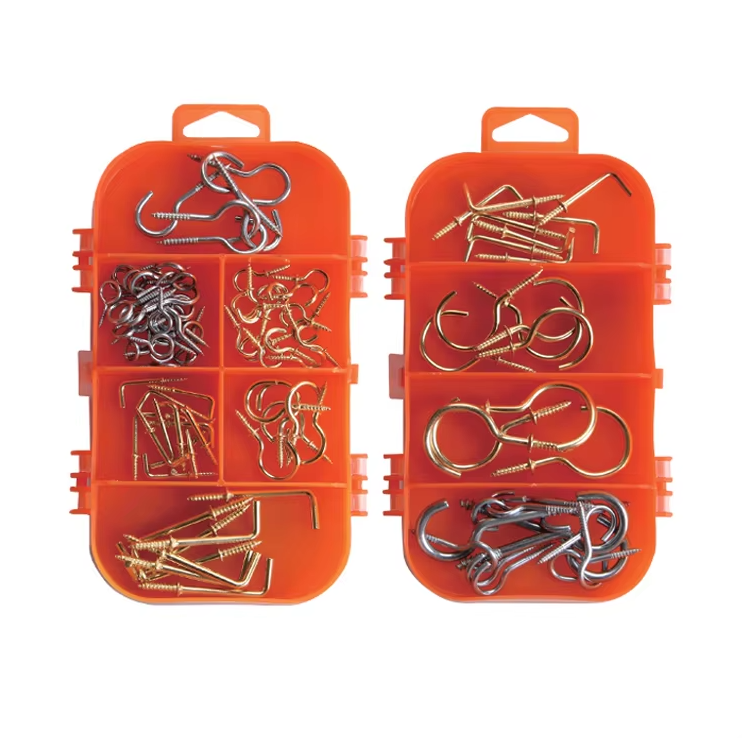
Mark the spot and check for wires. 2. Drill the pilot hole perpendicular. 3. Wax the threads. 4. Turn the eye screw in by hand. 5. Align the loop before final tightening. Impact drivers can snap eye screws or strip the head. Standards such as ASME B18.15.1 and ASTM A489 cover forged eyebolts and lifting eyes, not decorative eye screws, yet they reinforce a useful habit: know the rated load, the pull direction, and the inspection interval. Decorative eye screws are not certified rigging hardware. Retail-ready kits benefit from mixed sizes, matching S hooks, and a clear pilot-hole chart. Zhongsheng, a Wenzhou-based hardware manufacturer since 1993, builds DIY hardware assortments with PS, PP, ABS, and PVC blister packaging for brands that need shelf-ready eye screw sets.