 EN
EN

Hardness Is Only Half the Durability Story
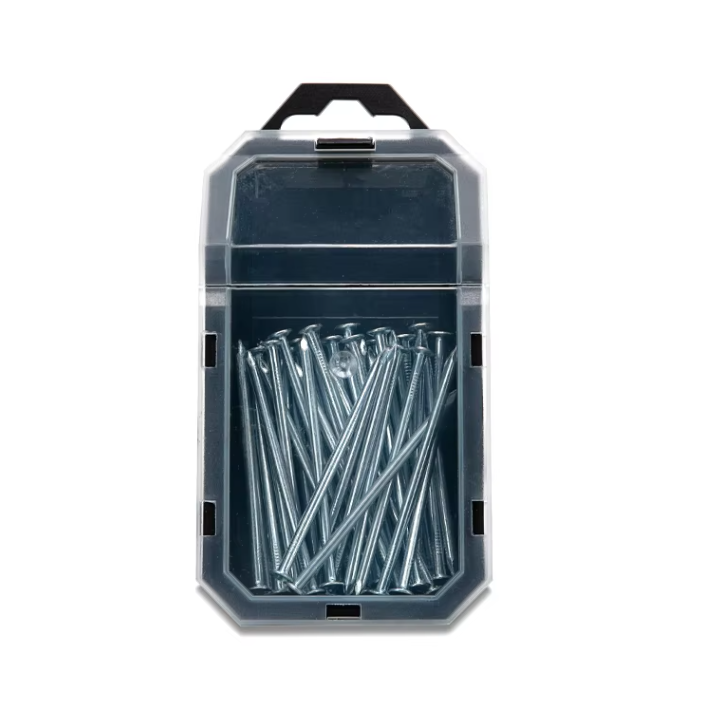
A concrete nail lives a brutal life. It gets struck, driven into a mineral surface, and left to hold a fixture under vibration. Hardened steel concrete nails last longer in that role because the steel resists permanent deformation. Soft low carbon nails bend, mushroom, or flatten at the tip. Once the point rounds over, the nail stops cutting and starts pushing. Energy goes into bending the shank instead of seating the fastener. Hardness helps, but it is not a magic switch. A nail that is too hard can snap under a glancing hammer blow. Durability comes from a balance of hardness, toughness, shank geometry, and coating.
What Heat Treatment Does Inside the Shank
Concrete nails usually start as medium or high carbon steel. The wire is cut, headed, pointed, and then heat treated. Austenitizing raises the steel into a face centered cubic structure. Quenching traps carbon in a strained body centered tetragonal structure. Tempering follows, which relaxes some strain and restores toughness. The result is a martensitic or tempered martensitic microstructure. That structure resists plastic flow. It also stores internal stress if the tempering step is rushed. A nail at 55 HRC with poor tempering may outlast a soft nail in one strike and shatter on the next. ASTM F1667 groups nails by material and dimensions, so a buyer can compare nominal properties instead of relying on color alone.
Why a Hardened Tip Bites Aggregate Instead of Mushrooming
Concrete is not a uniform solid. It contains cement paste, sand, and coarse aggregate. A driven nail must either push particles aside or fracture them at the point. A soft tip deforms first. The point radius grows, contact stress drops, and the nail needs far more energy to advance. A hardened tip keeps a small radius longer. It concentrates stress and creates a local fracture path. Fluted shanks add another effect. The flutes displace material outward and increase friction along the embedded length. That friction is what resists pull out after the hammer stops. Hardness without the right shank is just a brittle pin.
The Tradeoff: Brittleness, Coating, and Base Material
Hardened does not mean indestructible. A very hard concrete nail can fail in three common ways.
-
Off angle strikes bend or snap the shank.
-
Hard aggregate can chip the tip if the nail is too brittle.
-
Thin coatings can crack during driving, which opens a path for rust.
Base material still rules. Soft brick accepts many nails. Hollow block usually needs a sleeve anchor. Cracked concrete needs an adhesive or mechanical anchor, not a driven nail. Coating choice matters in wet or coastal work. Zinc and zinc alloy coatings offer sacrificial protection, but they are not a substitute for stainless steel in aggressive conditions. For critical overhead loads, a tested anchor system is the honest choice.
| Nail type | Typical hardness | Bending resistance | Corrosion protection | Best base | Common failure |
|---|---|---|---|---|---|
| Low carbon common nail | Low | High | None or light zinc | Soft wood, soft brick | Bends and mushrooms |
| Hardened concrete nail | Medium to high | Low to medium | Bare or zinc | Concrete, hard brick | Snaps or chips |
| Coated hardened nail | Medium to high | Low to medium | Zinc or alloy | Damp concrete | Coating damage |
| Stainless masonry nail | Medium | Medium | High | Coastal or wet areas | Higher cost |
A Field Case from a Coastal Substation Retrofit
A 2020 retrofit at a coastal substation in southern China showed the difference in plain terms. The crew was fastening grounding clips to a weathered concrete wall. The first batch used plain common nails. Of 120 nails, 26 bent before reaching full embedment. The next batch used hardened steel concrete nails with a setting tool. Only 4 failed, and all 4 were traced to striking aggregate at an angle. A pull test on a sample set showed the hardened nails held better, but the real gain was consistency. The crew could drive a line of clips without stopping to pull bent nails. That kind of field result is not about a single number. It comes from matching the nail to the wall and using a controlled strike.
Standards, Specs, and Packaging That Keep Quality Repeatable
Specifications turn durability into something a buyer can check. ASTM F1667 covers nails, spikes, and staples, including material classes and dimensions. ASTM E488 describes test methods for anchors in concrete, which helps verify pull out performance after installation. Hardness testing, shank diameter tolerance, point angle, and coating weight all belong on a serious spec sheet. Packaging matters too. Mixed sizes in a clear blister pack reduce sorting time, and PS, PP, ABS, or PVC boxes keep nails dry and separated before use. Zhongsheng, a Wenzhou hardware manufacturer active since 1993, has built its supply around that kind of assortment packaging and custom manufacturing. A durable nail starts with good steel, then depends on heat treatment, coating, and a kit that puts the right fastener in the right hand.
Table of Contents
- Hardness Is Only Half the Durability Story
- What Heat Treatment Does Inside the Shank
- Why a Hardened Tip Bites Aggregate Instead of Mushrooming
- The Tradeoff: Brittleness, Coating, and Base Material
- A Field Case from a Coastal Substation Retrofit
- Standards, Specs, and Packaging That Keep Quality Repeatable