 EN
EN

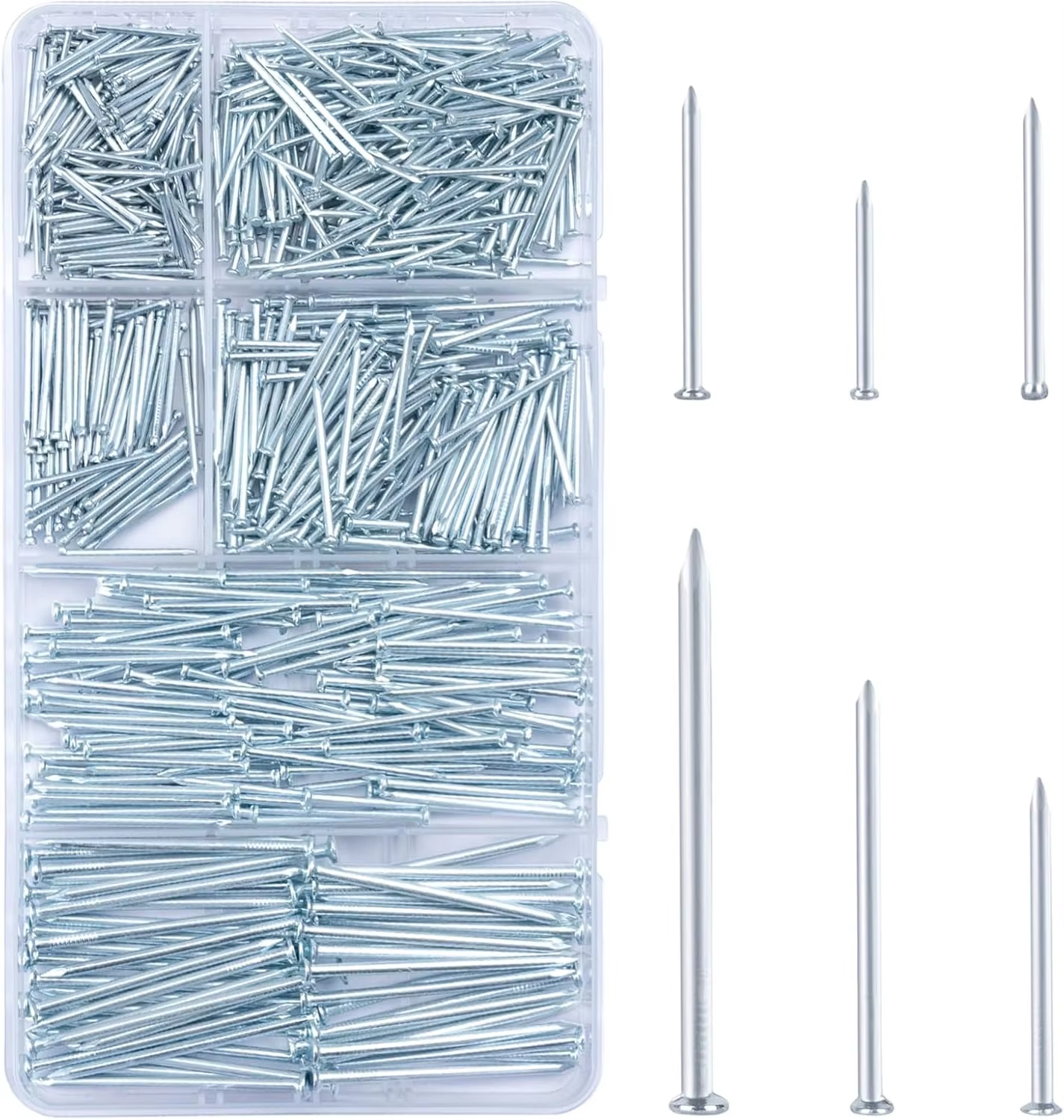
Steel Wire Nail Material Science and Precision Manufacturing
Carbon Steel Grades and Alloy Additions for Strength-Ductility Balance
Steel wire nails for high performance typically start with low carbon content around 0.05 to 0.25 percent. This gives them just right mix between being strong enough to hold things together but still flexible enough not to snap easily. Adding manganese at levels between 0.30 and 0.90 percent helps make the metal tougher as it gets shaped cold, which is important during manufacturing. A small amount of vanadium below 0.10 percent also plays its part by making the grain structure finer so the nail doesn't crack unexpectedly under stress. These combined properties let standard nails handle shear forces ranging from about 16 thousand to 22 thousand pounds per square inch, something that matters a lot when hammering into tight knots in hardwoods. What's really useful too is how these nails perform reliably whether working in freezing winter conditions down to minus 20 degrees Fahrenheit or hot summer days up to 120 degrees, since wood tends to expand and contract with seasons.
Cold-Heading Process: How Wire Drawing and Forming Ensure Consistent Gauge and Head Integrity
Wire rods undergo progressive diameter reduction through carbide dies, achieving ±0.001 inch gauge tolerance before entering cold-heading machines. At room temperature, high-speed formers (600–800 strokes/minute) use sequential dies to produce:
- Perfectly concentric shank alignment
- Uniform head profiles with 120° bearing surfaces
- Precision-point geometries that reduce wood splitting by 40%
Cold working induces strain hardening, increasing tensile strength 15–20% over hot-formed alternatives. Automated optical inspection validates compliance with ASTM F1667, rejecting units exceeding 0.003 inch head eccentricity or 0.5° point deviation. As a result, 99.8% of fasteners in each batch meet exacting construction specifications.
Corrosion Protection Systems for Steel Wire Nails
Galvanization Standards (ASTM A153, A641) and Real-World Durability in Humid Environments
Both hot dip galvanization (ASTM A153) and electro galvanization (ASTM A641) offer two forms of protection against rust. First, they create a physical shield, and second, they act as sacrificial anodes that protect the underlying metal. Research conducted in tropical regions indicates that nails meeting ASTM standards can hold up structurally for well over 15 years. That's about three to five times longer than regular uncoated nails. These coated fasteners stand up to moisture related oxidation, which happens to be responsible for roughly one third of all fastener failures in areas with high humidity according to the Building Materials Journal from 2023. The thickness of the coating matters a lot when it comes to how long things last. Measured in microns as specified by ASTM, thicker coatings generally mean better protection. For most roofing jobs and outdoor use, G90 coatings are considered the sweet spot for performance.
Next-Generation Coatings: Zinc-Aluminum, Vinyl-Phosphate, and Coastal Code Compliance
Advanced coatings address extreme corrosion challenges:
- Zinc-aluminum alloys (e.g., 95% Zn, 5% Al) deliver twice the salt-spray resistance of pure zinc, satisfying ASCE 7-22 requirements for coastal construction.
- Vinyl-phosphate hybrids integrate installation lubrication with phosphate-based corrosion inhibitors, reducing rust progression by 78% in accelerated weathering tests.
These systems exceed traditional galvanization in marine environments, passing 3,000-hour salt-fog tests (ASTM B117) while complying with IBC Section 2304.10 for corrosion-resistant fasteners. Their layered microstructure impedes chloride ingress, enabling reliable use in seawalls and flood-prone infrastructure.
Mechanical Properties, Dimensional Standards, and Performance Metrics
Yield Strength, Tensile Strength, and Bending Ductility by Gauge (e.g., 8d to 20d)
The performance of steel wire nails really depends on three main characteristics that work together: first, yield strength which basically means how much force they can take before getting permanently bent out of shape. Then there's tensile strength, that's the point where the nail just breaks under pressure. And finally we have bending ductility, or how much the nail can be flexed without actually snapping. When looking at different sizes, bigger nails like the 20d variety usually reach tensile strengths somewhere between 100 thousand to almost 180 thousand pounds per square inch. Smaller nails in the 8d to 10d range tend to focus more on being able to bend rather than breaking, so they can handle angles from about 15 degrees up to 30 degrees when needed for certain structural applications. The manufacturing process matters too. Cold working the steel aligns the grains better, which makes these nails stronger against initial bending forces. Tests show this process can boost yield strength anywhere from 20% all the way up to 40% compared to regular annealed wire. For framing purposes, most builders want nails with at least 60 thousand psi yield strength to hold things together properly. Finish nails tell a different story though. These smaller fasteners need to be more flexible so they don't split the wood when driven in place, making them ideal for trim work around doors and windows.
Decoding Nail Sizing: Penny (d) Designation, Length-to-Gauge Ratios, and ASTM F1667 Compliance
Nails come in different sizes based on the pennyweight system marked as "d." The bigger the number after "d," the longer and thicker the nail gets. For example, an 8d nail measures around 2.5 inches long with a thickness of 0.113 inches, while a 16d nail stretches to 3.5 inches at 0.135 inches thick. There's actually a standard called ASTM F1667 that sets rules for how accurate these measurements need to be. Most nails should fall within plus or minus 0.02 inches in length, and their thickness can't vary by more than 0.004 inches from what's specified. Woodworkers pay attention to something called the length-to-gauge ratio too because it stops nails from bending when driven into wood. Softwoods generally handle a ratio of 30:1, whereas hardwoods work better with about 20:1. Following these guidelines makes sure nails go in smoothly and hold firmly in place. According to ASTM standards, even a regular 10d nail needs to withstand approximately 112 pounds per inch of pulling force when stuck in spruce wood.
Application-Specific Selection and Building Code Alignment
Picking the right steel wire nail means matching up several factors including what kind of metal it's made from, how well it stands up to rust, its thickness, and overall length against what the building needs and where it will be used. When working on framing projects, going for high carbon steel nails that have been treated with hot dip galvanization according to ASTM A153 standards works best because they handle shear stress and keep water out effectively. For cedar decks where wood stains might be a problem, vinyl coated options are better while stainless steel nails make sense in areas near saltwater since they won't corrode from chloride exposure. There are also specific situations where building codes require certain types of nails for safety reasons.
- Roof sheathing: 8d common nails (0.131" – 2.5")
- Floor joist hangers: 10d sinkers (0.148" diameter)
- Siding: 6d ring-shank nails for wind uplift resistance
ASTM F1667 (2023) sets minimum mechanical requirements—including 80,000 psi yield strength for common nails—ensuring dimensional consistency and withdrawal capacity across all penny sizes. Adherence mitigates structural risk: undersized or uncoated nails in pressure-treated lumber corrode up to 50% faster in high-humidity conditions, per ASTM G199-22 test protocols.
FAQ Section
What are the benefits of low carbon content in steel wire nails?
Low carbon content allows steel wire nails to maintain a balance of strength and flexibility, making them both durable and adaptable to various structural needs.
How do cold-heading processes affect nail performance?
Cold-heading processes refine the nail's gauge and head integrity, enhancing its tensile strength and ensuring it meets precise specifications for reliable use.
Why is galvanization important for steel wire nails?
Galvanization provides rust protection by forming a physical shield and serving as a sacrificial anode, greatly extending the lifespan of nails in humid environments.