 EN
EN

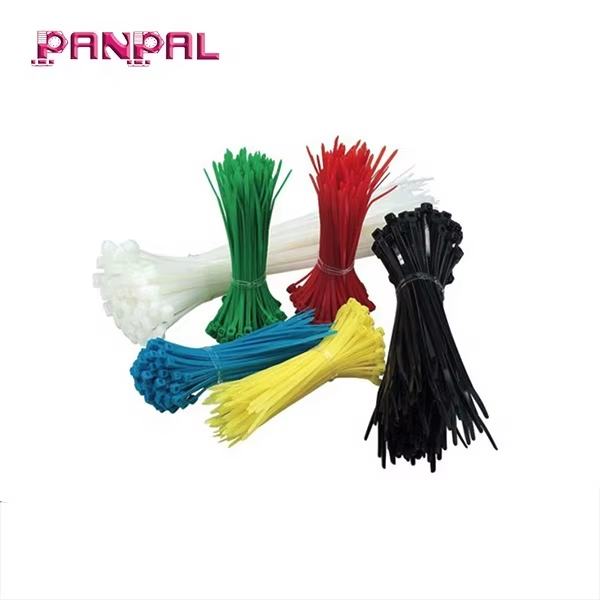
Why Nylon Cable Zip Ties Are the Industry Standard for Reliable Bundling
Ratchet-and-pawl mechanics: How self-locking design ensures consistent tension and vibration resistance
Nylon cable zip ties work thanks to their ratchet and pawl setup. When tightened, the teeth on the strap catch against a spring loaded piece inside the head part, stopping them from slipping back out once they're secured. This keeps cables tight together even when there's constant shaking going on around them. Studies show these locking ties cut down failures by roughly two thirds compared to regular ones without this feature in things like factory equipment and cars. Another big plus is that they don't need adjusting over time because the force gets spread out all along the tie rather than concentrating at certain points. For stuff like computer servers or belt conveyors where loose connections might cause problems, this kind of secure hold makes all the difference.
Nylon 6/6 vs. UV-stabilized and flame-retardant variants: Matching material properties to environment and safety requirements
| Material | Key Properties | Optimal Use Cases |
|---|---|---|
| Nylon 6/6 | High tensile strength (50–250 lbs), moisture resistance | Indoor panels, dry environments |
| UV-stabilized | Resists solar degradation; retains 90% strength after 5+ years outdoors | Solar farms, telecom towers |
| Flame-retardant | Self-extinguishing (<3 sec ignition time), low smoke emission | Data centers, industrial plants |
Nylon 6/6 is pretty much standard stuff for indoor wire bundling because it holds up well without being too stiff. When we need something that can handle outdoor conditions, manufacturers add carbon black or HALS stabilizers to stop the material from getting brittle under sunlight. Without these additives, regular nylon ties start breaking down much quicker when exposed to UV rays. For applications where fire safety matters, there are special flame retardant versions available that pass UL 94 V-0 tests. These help contain fires better and produce less smoke if there's an electrical fault somewhere. Getting the right type really makes a difference in how long things last and whether they comply with regulations. Using regular nylon instead of flame retardant options in places like electrical cabinets? Well, studies show that can actually contribute to fires spreading faster than we'd like.
Selecting the Right Nylon Cable Zip Ties by Size, Strength, and Application Context
Sizing guide: Calculating optimal length, width, and tensile rating based on bundle diameter and load conditions
Start by checking what size the bundle actually is and figure out how much weight it will need to hold. When dealing with bundles smaller than 2 inches across, regular ties work fine most of the time. These typically measure between 4 to 8 inches long and about 0.3 inches wide, capable of handling tension from 18 up to around 50 pounds. But when loads go over 50 pounds, we definitely need stronger industrial grade ties rated for at least 120 pounds all the way up to 250 pounds or more. To get the right length, multiply the bundle's circumference by 1.5 first, then add whatever extra length needed for the head part. Don't forget to throw in an extra 20% just to be safe. Take this example: if something weighs 100 pounds, our ties should handle at least 120 pounds minimum. Real world experience shows these numbers make sense, and plenty of professionals rely on them day after day without issues.
| Bundle Diameter | Recommended Tensile | Use Case Examples |
|---|---|---|
| < 1 inch | 18–50 lbs | Office cables, wiring harnesses |
| 1–3 inches | 50–120 lbs | Server racks, HVAC systems |
| > 3 inches | 120–250+ lbs | Construction conduits, marine rigging |
When to choose reusable, stainless-steel-reinforced, or low-profile nylon cable zip ties
Reusable cable ties work really well during testing phases, when building prototypes, or setting things up temporarily where we need to keep changing configurations all the time. Some versions reinforced with stainless steel stand up much better against corrosion problems that happen in chemical plants and along coastlines where salt air gets everywhere and eats away at regular nylon products over time. The low profile models are super thin, sometimes less than a tenth of an inch thick, so they fit nicely without taking up much room inside tight spaces like airplane wiring compartments, medical equipment boxes, and small electronic devices. When used outside, these UV stabilized ties last about three times as long as normal nylon according to those lab tests following ASTM standards. We've seen this hold true in real world conditions too.
Correct Installation of Nylon Cable Zip Ties: Precision, Safety, and Long-Term Integrity
The loop-and-tension method: Step-by-step best practice for electrical panels and data racks
For professional-grade installations in electrical panels or server racks:
- Feed the tapered end fully through the head until the loop encircles the bundle
- Pull steadily to achieve firm contact—enough to eliminate slack but avoid deforming insulation
- Trim excess tail within ¼ inch of the head using flush-cutters
This method ensures vibration resistance and preserves access for future adjustments—key for maintainable, code-compliant infrastructure.
Avoiding common failures: Overtightening thresholds, insulation compression, and thermal expansion risks
Overtightening is the leading cause of premature failure. Industry guidelines recommend applying no more than 80% of a tie’s rated tensile strength to avoid:
- Insulation compression: Reducing cable diameter by >30% risks conductor damage and insulation breakdown
- Thermal stress: Nylon expands and contracts ~0.4% per 10°F temperature change—leaving micro-gaps accommodates movement
-
Cut-through: Sharp-edged bundles (e.g., conduit edges or metal brackets) require protective grommets or sleeves
In mission-critical settings, verify tension with a calibrated pull-test tool before final trimming.
Boosting Efficiency with Tools and Workflow Integration for High-Volume Nylon Cable Zip Tie Use
Trying to install these things manually just doesn't work when companies need to put in thousands of ties every day across their operations. That's where automatic dispensers and those tension-controlled applicators come in handy. Some field tests indicate these devices can slash installation time by half while maintaining consistent tension between 30 and 50 pounds each time. Putting these tools into actual workflows makes a big difference too. Think about mounting dispensers on carts alongside pre-sorted bundles of already cut ties – this setup cuts down wasted movement and keeps everything looking uniform. A major car parts manufacturer actually saw their cable harness assembly times drop by around 30% once they started using this system regularly. For regular maintenance jobs, there are even quick release versions that save workers plenty of time over months or years, although whether it pays off financially really depends on how often these projects happen. Combine all this with proper 5S practices in shop floors, and suddenly those simple nylon cable ties stop being just fasteners and start contributing real numbers to productivity reports instead.
FAQ
What are nylon cable zip ties used for?
Nylon cable zip ties are primarily used for bundling and securing cables, wires, and other items, providing a reliable hold with consistent tension.
How do I select the right nylon cable zip tie?
To select the right nylon cable zip tie, consider the bundle diameter, required tensile strength, and specific application context. Choose standard or enhanced variants based on environmental and safety requirements.
Why should I use flame-retardant nylon ties?
Flame-retardant nylon ties are essential in environments where fire safety is critical. They help contain fires and lower smoke emissions, making them suitable for data centers and industrial applications.
Can nylon zip ties be used outdoors?
Yes, there are UV-stabilized versions of nylon zip ties designed for outdoor use, which resist solar degradation and maintain strength over extended periods.
How do I properly install nylon cable zip ties?
Proper installation involves using the loop-and-tension method to ensure firm contact without deforming insulation and trimming excess tails for a clean finish while maintaining maintainable infrastructure.