 EN
EN

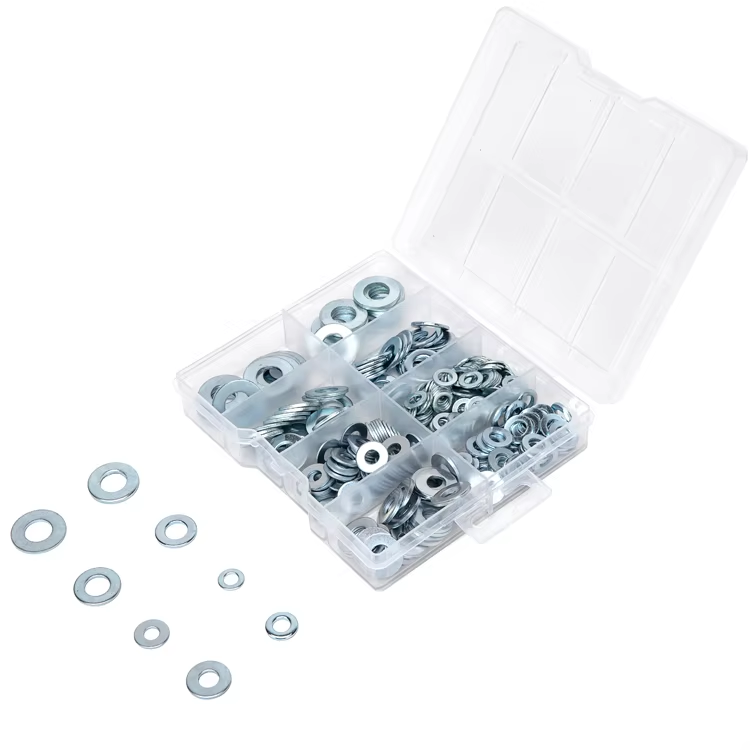
How Electrical Insulation Rubber Washers Prevent Current Flow
Molecular basis of rubber’s non-conductive behavior
The reason rubber works so well as an electrical insulator comes down to how its molecules are put together. Basically, we're talking about long chains of polymers connected through really strong chemical bonds that basically trap electrons in place. Metals work differently because their electrons can move around freely, allowing electricity to pass through them easily. Rubber is totally different though - it just doesn't let electrons move much at all, usually somewhere way below 10^-15 m² per volt second. This natural resistance stops electric current from flowing when regular voltages are applied. When manufacturers vulcanize rubber, they add sulfur connections throughout the material. These cross links help keep everything stable and stop the molecules from moving around too much when there's electrical pressure on the material. This stability is what keeps rubber working properly as an insulator even after years of use.
Dielectric strength benchmarks across common formulations (EPDM, silicone, neoprene)
Dielectric strength—the voltage a material withstands per unit thickness before breakdown—varies meaningfully across rubber types. Industry-standard ASTM D149 testing shows:
| Material | Dielectric Strength (kV/mm) | Max Temp Range |
|---|---|---|
| Silicone | 20–25 | –60°C to 230°C |
| EPDM | 15–20 | –50°C to 150°C |
| Neoprene | 12–17 | –40°C to 120°C |
Silicone works really well in those situations where there's high voltage involved or when temperatures get extremely hot because of its stable polysiloxane structure. Then we have EPDM rubber which handles medium voltage pretty reliably while standing up to ozone exposure and bad weather conditions making it great choice for things placed outside like equipment enclosures. Neoprene material gives up a bit on its ability to resist electricity but makes up for this weakness with excellent protection against oils and chemicals. What's interesting about these materials is how they actually work as insulators. Instead of just stopping electric charges dead in their tracks, they absorb that electrical energy at a molecular level through what scientists call reversible polarization processes. This basically means they slow down the point where insulation fails without letting any current pass through them normally.
Beyond Insulation: Dual-Function Sealing and Environmental Protection
Simultaneous electrical isolation and moisture/contaminant sealing in enclosures
Rubber washers used for electrical insulation do something special they bring together both dielectric properties and good sealing which makes them really important for those NEMA rated enclosures we see everywhere. When compressed, the elastic material actually molds itself around all sorts of uneven surfaces, so there's no tiny spaces left where water or dust might get inside. Some recent tests on enclosure integrity show that these washers can cut down moisture getting in by almost 98% for systems rated at NEMA 4X standards. Take silicone washers as an example they hold up to about 18 kilovolts per millimeter when it comes to stopping electricity from passing through, plus they keep out particles smaller than 5 microns. This matters a lot because salt air near coasts or industrial environments full of chemicals can eat away at equipment over time. And what's another benefit? These seals stop condensation forming inside the enclosure too, which is one of the main reasons why electrical panels develop dangerous arcs and tracking issues.
Performance degradation triggers: humidity, UV exposure, and thermal aging
Three primary environmental stressors accelerate functional decline in rubber washers:
- Humidity: Absorption swells polymer chains and introduces conductive pathways. EPDM washers lose up to 30% dielectric strength after 500 hours in damp-heat conditions (Material Stability Report 2023).
- UV exposure: Initiates photo-oxidative chain scission, causing surface crazing and microcracking—particularly rapid in neoprene (40% faster degradation than silicone under equivalent UV flux).
- Thermal aging: Sustained temperatures above 100°C trigger irreversible cross-link breakdown and hardening, resulting in compression set failure—loss of rebound elasticity that compromises both sealing and contact pressure.
In outdoor service, these combined effects typically necessitate replacement every 3–5 years. Visual inspection for surface cracking, hardening, or loss of resilience remains the most practical early-warning indicator of compromised insulation.
Real-World Applications of Electrical Insulation Rubber Washers
Solar PV mounting systems: Ground-fault isolation case study
When installing photovoltaic systems, those rubber insulating washers play a critical role in preventing ground faults, particularly at the points where aluminum racks meet grounded roof surfaces. Without proper insulation between metals, electricity finds unintended paths through the system which can lead to dangerous arc faults or even fires down the road. According to recent studies by NREL published last year, around 17% of all PV system problems stem from these kinds of grounding issues, often because installers didn't isolate components properly at connection points. Most professionals turn to EPDM rubber washers for this job since they maintain impressive electrical resistance (>30 kV/mm) even after years under harsh sunlight while also standing up well against water damage that causes other materials to swell. These washers do double duty too: stopping unwanted electrical flow while creating a barrier against salty coastal air and heavy rains. Installers working near the ocean report seeing systems last significantly longer when using quality EPDM washers, sometimes adding eight extra years of trouble-free operation in areas prone to corrosion.
Key mechanisms:
- Interrupting conductive paths between aluminum rails and grounded substrates
- Eliminating arcing potential near combustible roofing membranes
- Preserving long-term contact integrity despite daily thermal cycling
Material Selection Guide for Optimal Electrical Insulation Performance
Rubber vs. nylon, PTFE, and PEEK: Trade-offs in voltage rating, durability, and cost
Picking out the correct washer material isn't simply about finding something with the highest voltage rating. There's a whole mix of factors to consider including how well it insulates electricity, how tough it is mechanically, and what it will cost over time. Take those top performing thermoplastic materials for instance. PTFE can handle around 40 to 50 kilovolts per millimeter while PEEK manages about 45 to 55 kV/mm. They do great job insulating but they tend to be pretty stiff stuff. That stiffness actually makes them less reliable when it comes to sealing properly in situations where there might be movement or vibrations happening. On the other hand rubber options like silicone and EPDM stand out because they not only provide decent insulation between 20 and 35 kV/mm but also bounce back after being compressed and have shown real world durability too. Plus these rubber materials generally come out cheaper when looking at all costs involved over their lifetime.
| Material | Max Voltage Rating | Environmental Durability | Relative Cost |
|---|---|---|---|
| EPDM/Silicone | 25–35 kV | Excellent UV/ozone resistance | $$ |
| Nylon | 15–20 kV | Moderate moisture resistance | $ |
| PTFE | 40–50 kV | Poor compression set | $$$ |
| PEEK | 45–55 kV | Limited thermal cycling | $$$$ |
Industrial insulation failures can cost businesses over seven hundred forty thousand dollars according to research from the Ponemon Institute back in 2023, which puts into perspective what might seem like just a small extra expense for quality rubber products. When looking at different materials, silicone tends to be the go to option when dealing with situations involving big temperature changes or working in extremely cold conditions. On the other hand, EPDM rubber continues to dominate many applications where budget matters most and equipment sits outside exposed to ozone. This material offers pretty good performance while lasting longer than alternatives, making it a solid value proposition despite not being the flashiest choice on paper.
FAQ
Why is rubber used as an electrical insulator?
Rubber is used as an electrical insulator due to its molecular structure that traps electrons in place, preventing them from moving freely like in metals. This natural resistance to electron movement effectively stops electric current from flowing through rubber.
What are the environmental stressors that affect the performance of rubber washers?
The primary environmental stressors impacting rubber washers include humidity, UV exposure, and thermal aging. These factors can lead to functional decline such as loss of dielectric strength, surface cracking, and reduced sealing effectiveness over time.
How do rubber washers benefit solar PV mounting systems?
Rubber washers in solar PV mounting systems prevent ground faults by providing adequate insulation between metal components. They help avoid arcing and fires, maintain electrical resistance under harsh conditions, and offer durability against environmental factors like moisture and corrosion.